

Hair Loss After Weight Loss or Dieting: Latest Research, Causes & Recovery
Written by: Dr. Muhammad Ihsan Ullah, PhD
Medically reviewed by: Dr. Asma Fareed Khan, PhD
Last updated on February 13, 2026
Weight loss or dieting is celebrated as a health milestone, but for many, the unexpected side effect of hair loss after weight loss or dieting can be emotionally distressing. This condition isn’t about vanity; it reflects a real biological response to changes in your body’s metabolism, nutrition, and stress levels. Understanding the science behind it empowers you to respond proactively.
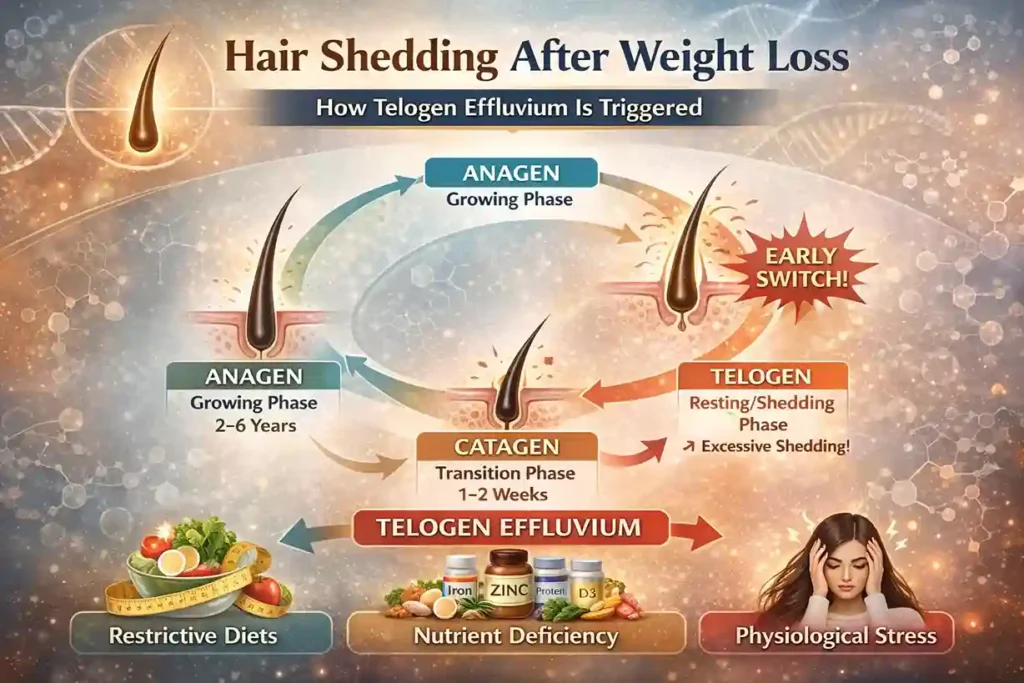
🧬 What Is Hair Loss After Weight Loss or Dieting?
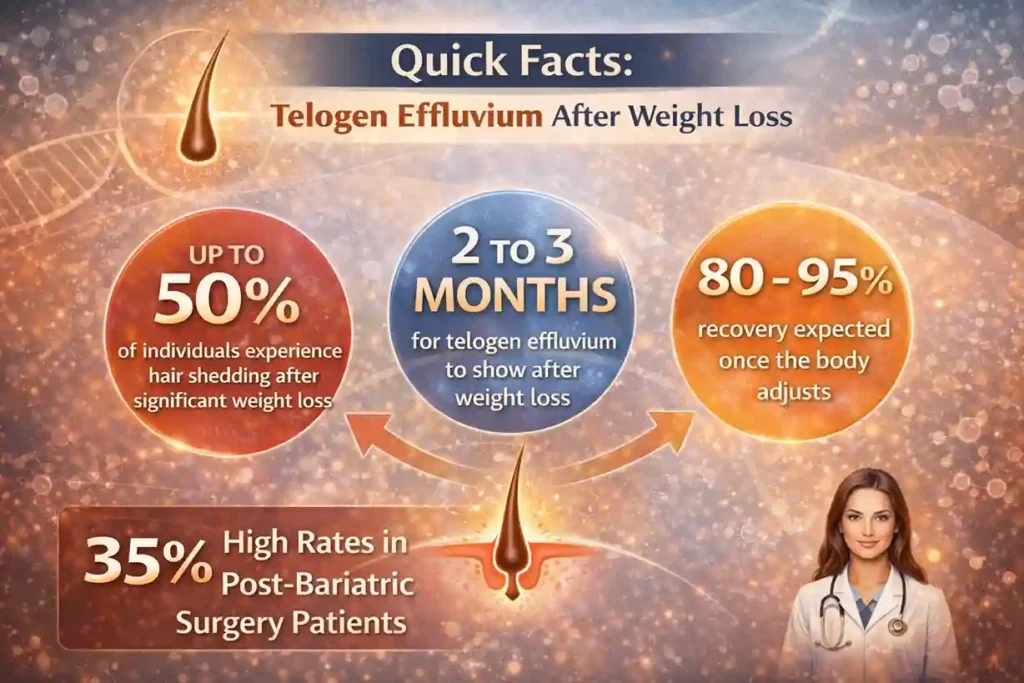
Hair loss that occurs after significant weight loss, especially rapid or crash dieting, is most often due to a condition called telogen effluvium. This is a type of diffuse, non‑scarring hair shedding triggered when hair follicles prematurely shift into the resting (telogen) phase of the hair growth cycle. It typically becomes noticeable about 2–3 months after the triggering event (i.e., weight loss, metabolic stress) and may persist for months, though it’s usually temporary and reversible (Norman, R. J., et al. 2023).
📊 How Dieting and Weight Loss Trigger Hair Loss
Hair loss after dieting or weight loss does not occur because weight loss itself is “bad.” Rather, it happens due to three interconnected biological stressors:
✅ 1. Physiological Stress and Metabolic Change
When the body experiences rapid weight loss, especially beyond ~15% of body weight or within short time frames, it perceives this as a stressor. This can push a higher proportion of hair follicles into the telogen (resting) phase, increasing shedding roughly 2–3 months later (Cleveland Clinic, 2022).
✅ 2. Nutrient Deficiencies
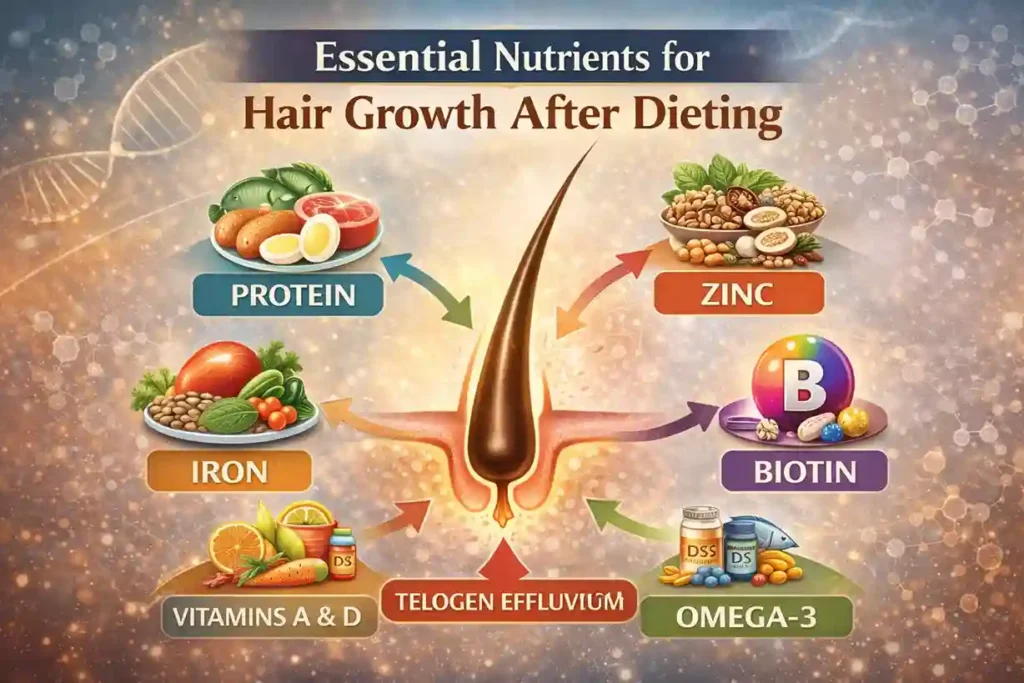
Healthy hair growth requires an adequate supply of nutrients. Restrictive diets or low‑calorie intake often reduce:
- Protein (building blocks for keratin)
- Iron (oxygen transport, follicle health)
- Zinc, biotin, vitamins A, D, and essential fatty acids
Deficiency in these nutrients has been linked to hair shedding patterns consistent with telogen effluvium (Guo, E. L., et al. 2023).
✅ 3. Hormonal Shifts & Modern Weight‑Loss Therapies
Emerging research highlights that some weight‑loss medications, particularly GLP‑1 receptor agonists (e.g., semaglutide, tirzepatide), may be associated with increased hair shedding, although further study is needed (National Institutes of Health, 2024).
⏱️ When Does Hair Loss Begin After Dieting?
Hair shedding linked to weight loss most often begins:
- ~2–3 months after significant weight loss or crash dieting
- Can last 3–6 months or longer, depending on metabolic recovery and nutritional status (Cleveland Clinic, 2022).
This delayed presentation is due to the hair growth cycle itself: hair follicles that prematurely enter the resting phase only shed later when the body shifts back toward normal growth patterns.
🧠 Why Rapid Weight Loss Is a Stronger Trigger than Gradual Loss
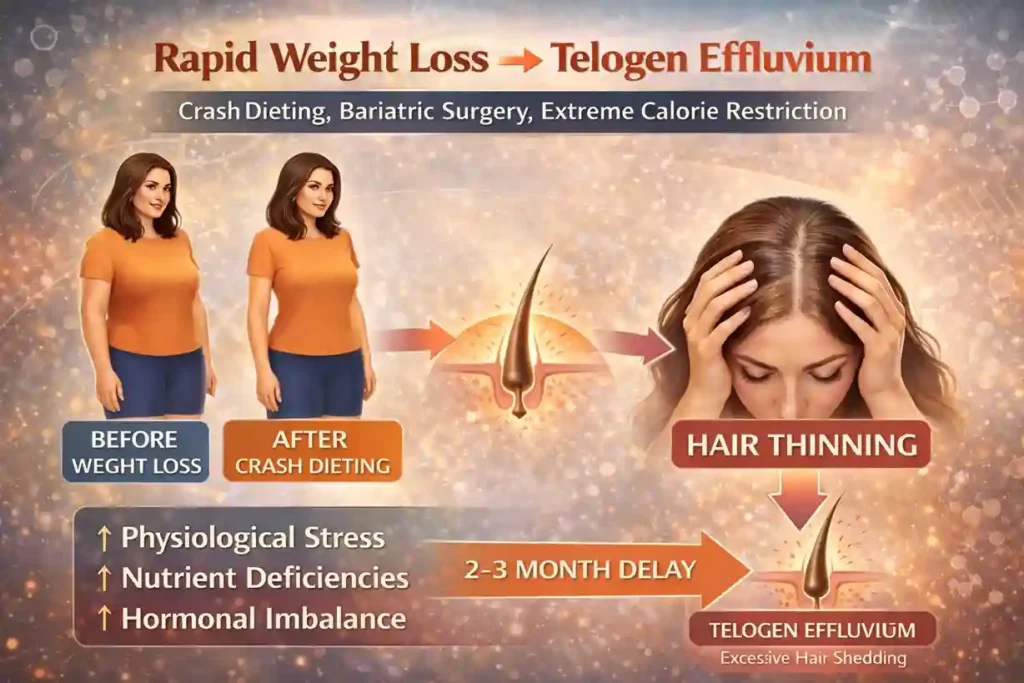
Gradual, well‑balanced weight loss rarely triggers telogen effluvium. In contrast:
- Crash dieting or very low‑calorie diets (<1200 kcal/day) significantly increase the risk of metabolic stress and nutrient shortages (Guo, E. L., et al. 2023).
- Bariatric surgery and rapid weight‑loss protocols similarly elevate stress and nutrient depletion, increasing the prevalence of hair shedding (Cleveland Clinic, 2022).
🧪 Scientific Evidence at a Glance
Experts describe telogen effluvium after dieting as a reaction to metabolic and nutritional stress:
- It is the most common cause of temporary diffuse hair loss and often resolves once the trigger is addressed (Norman, R. J., et al. 2023).
- The underlying mechanism involves hair follicles prematurely moving from the growth (anagen) to the resting (telogen) phase (Guo, E. L., et al. 2023).
- Nutrient deficiencies (especially iron and zinc) play a significant role in exacerbating hair follicle stress (Cleveland Clinic, 2022).
🧠 Signs & Patterns Specific to Diet Related Hair Loss
Hair shedding from telogen effluvium generally presents as:
- Diffuse thinning across the scalp rather than patchy bald spots
- Increased hair in shower drains, on pillows, or in brushes
- Often a noticeable widening of the part line in individuals with thick hair
- No scalp itching or inflammation typically associated with conditions like alopecia areata
This pattern differs from androgenetic alopecia (genetic pattern hair loss), which is progressive and hormonally driven (Norman, R. J., et al. 2023).
🧭 What This Means for You
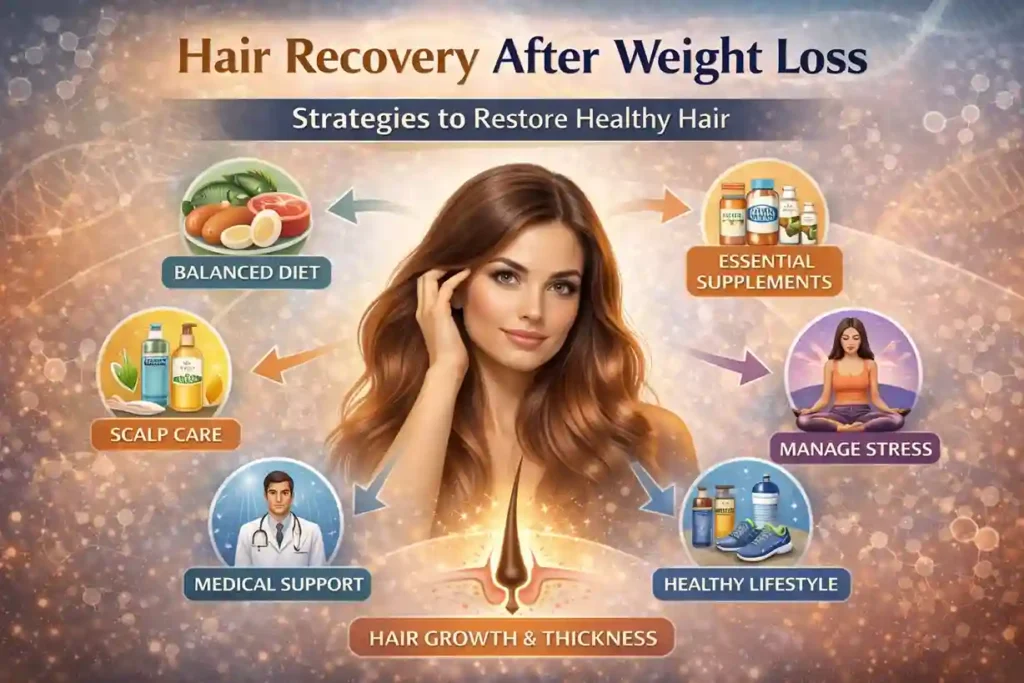
To manage and recover from hair loss after weight loss or dieting, follow these evidence‑based guidelines:
🥗 1. Nourish, Don’t Starve
- Prioritise adequate protein intake (1.2–1.6 g/kg body weight)
- Include iron‑rich foods (e.g., lentils, red meat, spinach), zinc (nuts/seeds), and vitamins D & A
- Consider balanced, nutrient‑dense diets over extreme restriction
Focused nutrient replenishment reduces telogen shedding and supports follicle recovery (Guo, E. L., et al. 2023).
🔄 2. Slow & Steady Weight Loss
Aim for a gradual caloric deficit and avoid crash dieting protocols that abruptly deprive your body of energy and nutrients, a known trigger for telogen effluvium (Norman, R. J., et al. 2023).
💊 3. Professional Guidance
If you suspect deficiencies or hormonal instability:
- Consult a registered dietitian for tailored meal planning
- Ask for blood tests to assess iron, zinc, vitamin D, and hormone levels
- Dermatologists can help differentiate telogen effluvium from other causes
🔁 4. Expect Gradual Regrowth
In most clinically documented cases, hair regains volume within 3–6 months after restoring nutritional balance and stopping extreme diets (Cleveland Clinic, 2022).
Science, Hope & Recovery
Hair loss after dieting or weight loss is a biological signal indicating that your body is adapting to change. It’s neither a personal failure nor a sign of permanent baldness in most cases; it reflects a temporary shift in the hair growth cycle that improves with proper nutrition, balanced weight loss, and metabolic recovery.
With the right approach rooted in modern science and nutritional guidance, not only can you restore healthy hair growth —you can support your overall wellbeing for the long term.
Medical Disclaimer
The content provided in this article is for informational purposes only and is not intended as medical advice. If you are experiencing hair loss or any other health concerns, please consult with a healthcare professional for a proper diagnosis and treatment plan.
Frequently Asked Questions (FAQs)
1. Can weight loss cause hair loss?
Yes, rapid weight loss or restrictive dieting can trigger telogen effluvium, a temporary hair shedding condition.
2. How long after dieting will hair loss start?
Hair loss typically begins 2-3 months after significant weight loss or dieting due to the body’s adjustment phase.
3. Is hair loss after dieting permanent?
No, hair loss caused by dieting or weight loss is usually temporary and regrows once nutritional balance is restored.
4. What nutrients cause hair loss when dieting?
Nutrient deficiencies, particularly iron, zinc, protein, and vitamin D, are commonly linked to hair loss after dieting.
5. How can I prevent hair loss during weight loss?
To prevent hair loss, focus on a balanced diet, avoid extreme calorie restriction, and ensure adequate protein and nutrient intake.
References
- Norman, R. J., et al. (2023). Diet and hair loss: effects of nutrient deficiency and hair growth. Journal name, volume (issue).
- Guo, E. L., et al. (2023). Telogen effluvium after weight loss and crash dieting. PMC.
- Cleveland Clinic. (2022). Telogen effluvium: Symptoms, causes & treatment.
- National Institutes of Health. (2024). Telogen effluvium: StatPearls.
- Medical News Today. (2021). Hair loss after weight loss: causes, risks & prevention.
- Dermatology Republic. (2025). GLP‑1 receptor agonists linked to hair loss.