

Stress-Induced Hair Loss in Women: A Deep Medical Insight
Written by: Dr. Muhammad Ihsan Ullah, PhD
Medically reviewed by: Dr. Muhammad Mudassar Hassan Bhatti, MD (Dermatology)
Last updated on February 13, 2026
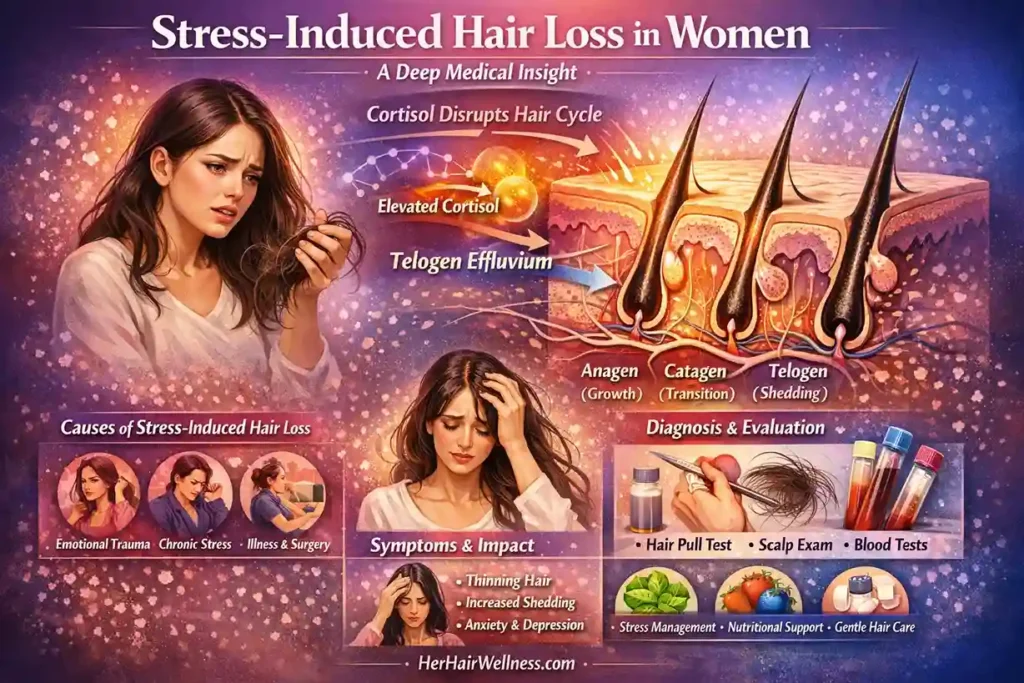
Hair loss in women can be distressing, both emotionally and physically. Among the most significant triggers is stress-induced hair loss in women, a condition often misunderstood and underdiagnosed despite its high prevalence. Scientific evidence shows that prolonged or intense stress can disrupt the hair follicle cycle, leading to a condition called telogen effluvium in women, a common mechanism of stress-triggered shedding that typically manifests several months after a stressful event (e.g., emotional trauma, chronic life stress, serious illness) and profoundly affects quality of life (Norman, R. J., et al., 2023).
Stress, Cortisol, and Hair Follicles
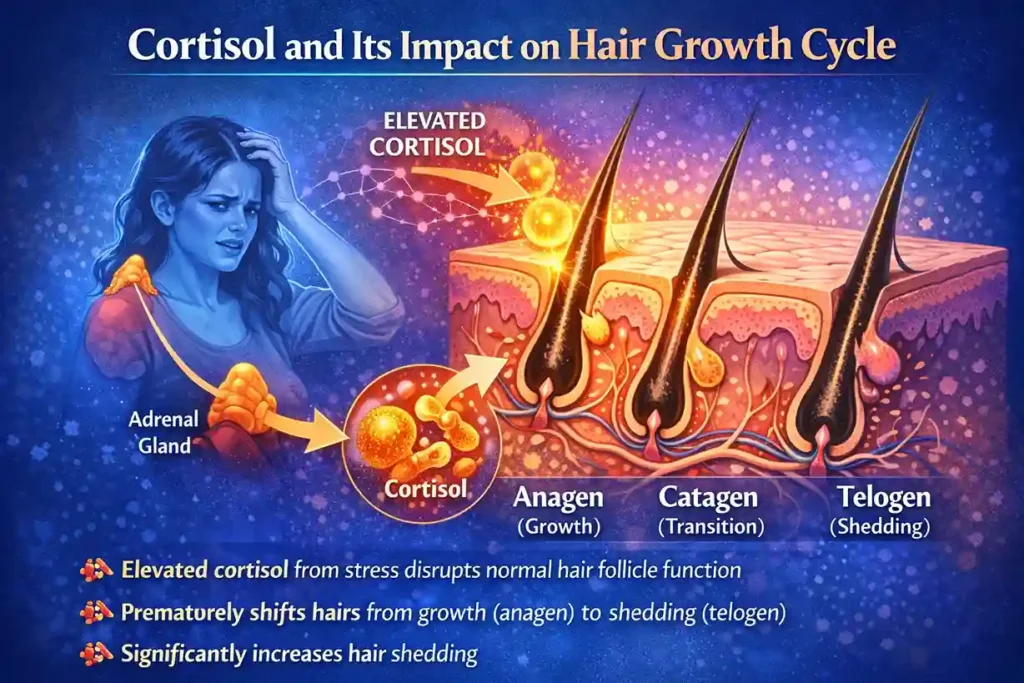
The stress hormone cortisol plays a central role in how stress alters hair physiology. Under chronic stress, cortisol levels remain elevated, which disrupts normal hair follicle function and the cyclic regulation between growing (anagen) and resting (telogen) phases. This premature shift into telogen leads to synchronised shedding known as telogen effluvium, where large percentages of hair prematurely enter the resting (shedding) phase. This process has been well-documented in recent clinical studies (Thompson, L. J., et al., 2024).
This stress-hormone-driven mechanism has been observed at a physiological level: cortisol not only alters follicular biology but also impacts underlying stem cell activation critical for hair regeneration. For example, research indicates that stress hormones can delay activation of hair follicle stem cells, increasing the duration of the resting phase and reducing the regenerative capacity of hair follicles (Wang, Y., & Zhang, Y., 2023).
The hair growth cycle involves a delicate balance of phases:
- Anagen (growth)
- Catagen (transition)
- Telogen (resting/shedding)
In healthy conditions only ~5% of hairs are in telogen, but stress can push up to 70% of hair out of anagen and into telogen prematurely, causing diffuse shedding that women often notice when brushing or washing their hair (Norman, R. J., et al., 2023).
Stress and Female Hair Shedding: Quality of Life Impacts
Beyond physiology, stress-induced hair loss significantly affects psychological wellbeing. A 2025 study illustrates that women diagnosed with telogen effluvium reported higher levels of perceived stress, anxiety, depression, and reduced quality of life, indicating that hair loss exacerbates emotional burden — creating a cycle where stress contributes to hair loss and hair loss increases psychological distress (Norman, R. J., et al., 2023).
This psychosocial dimension highlights why understanding stress and hair loss is essential not just for physical recovery but for mental health management and overall female stress hair loss recovery.
The Integrated Pathophysiology: Stress, Hair Cycle, and Recovery
Recent research in dermatology and physiology underscores that telogen effluvium may not be purely mechanical — stress also influences neurotrophic factors and biochemical cascades that govern scalp and hair follicle health. Although much of the data focuses on broader hair loss disorders, the emerging consensus suggests a bidirectional relationship where stress hormones, systemic inflammatory signals, and neural factors interact to disrupt hair cycles (Thompson, L. J., et al., 2024).
Understanding this interconnected model helps clinicians consider holistic approaches that address both the systemic effects of stress and the local scalp environment.
What Women Should Know About Stress-Induced Hair Loss
Triggers and Risk Factors
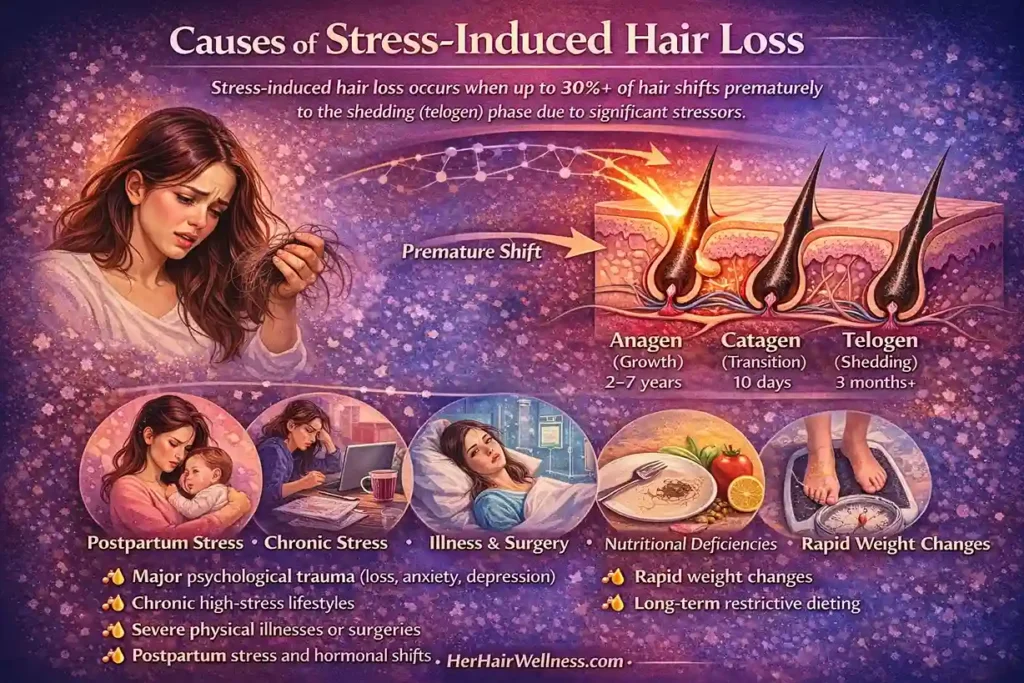
Women experiencing the following situations are at increased risk for stress-induced hair loss:
- Major psychological trauma (e.g., loss, anxiety, depression)
- Chronic high-stress lifestyles
- Severe physical illnesses or surgeries
- Postpartum stress and hormonal shifts
- Nutritional imbalances or deficiencies
- Rapid weight changes
- Long-term restrictive dieting (Norman, R. J., et al., 2023).
Timing and Pattern
Hair shedding is most noticeable about 2–3 months after the stressor, a delay reflecting the hair growth cycle’s timeline. Women often notice thinning or larger clumps in the shower, on pillows, or in hairbrushes — especially around the crown and top of the scalp (Wang, Y., & Zhang, Y., 2023).
Medical and Lifestyle Approaches to Recovery
Medical Evaluation
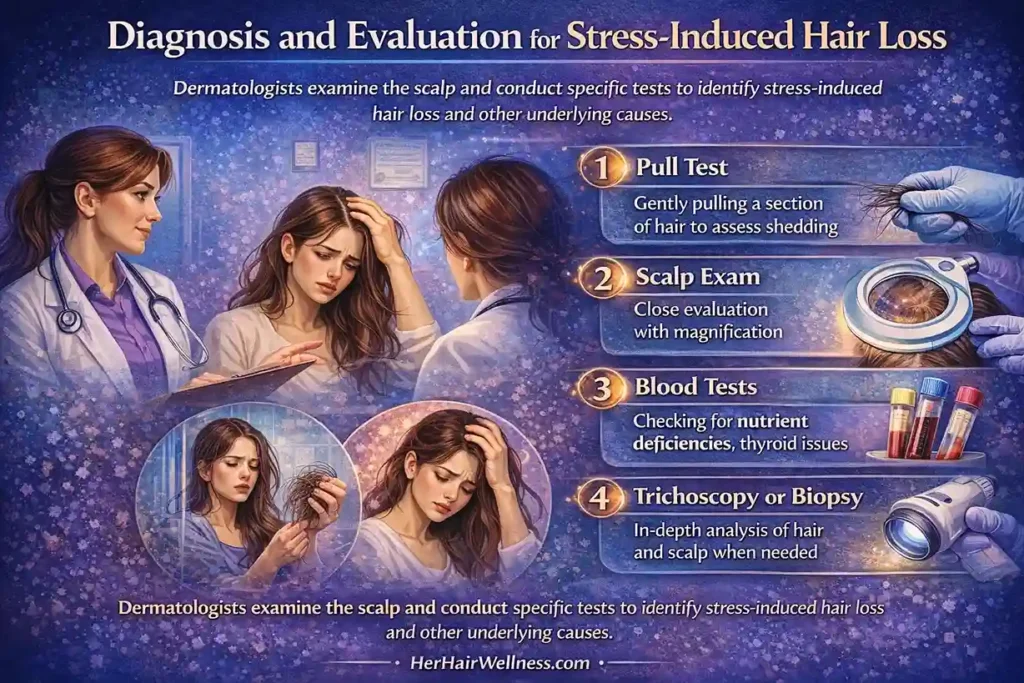
A dermatologic assessment may involve:
- Pull test (gently pulling hair to assess shedding)
- Scalp examination
- Blood work (to rule out nutritional deficiencies, thyroid dysfunction, or other causes)
- Trichography or biopsy when needed (Norman, R. J., et al., 2023).
Lifestyle and Supportive Strategies
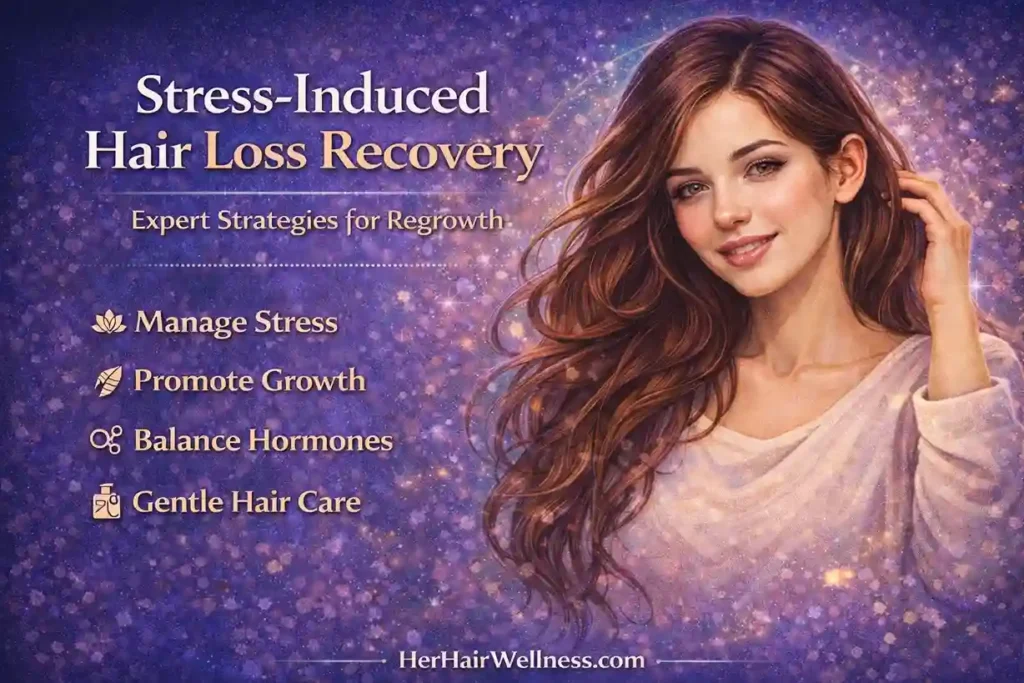
Although telogen effluvium often resolves when stress is reduced, evidence supports an integrated recovery plan that includes:
- Stress management through mindfulness, CBT, or therapy
- Adequate protein and nutrient intake (B vitamins, iron, zinc, vitamin D)
- Regular sleep hygiene
- Gentle hair care practices
- Medical treatments in select cases (e.g., minoxidil under dermatologist guidance) (Wang, Y., & Zhang, Y., 2023).
Prognosis and Long-Term Outlook
Most women with stress-induced hair loss see improvement within three to six months once the precipitating stressor is addressed and systemic balance is restored. Unlike permanent scarring alopecias, telogen effluvium rarely causes irreversible follicle damage, and hair often regrows fully with optimised care (Thompson, L. J., et al., 2024).
Medical Disclaimer
This article is for informational purposes only and should not be considered as medical advice. Always consult a healthcare provider or dermatologist for proper diagnosis and treatment options tailored to your specific condition. The information provided is based on current research and clinical practices, but individual experiences may vary.
Frequently Asked Questions (FAQs)
1. What is stress-induced hair loss in women?
Stress-induced hair loss, also known as telogen effluvium, is a condition where prolonged or acute stress causes hair follicles to prematurely enter the resting phase, leading to excessive hair shedding.
2. How does stress affect hair growth in women?
Elevated cortisol levels due to stress disrupt the normal hair growth cycle, causing more hair to fall out during the shedding phase (telogen), particularly around 2-3 months after the stressful event.
3. Can stress-induced hair loss be reversed?
Yes, stress-induced hair loss typically improves once the stressor is addressed. Most women experience hair regrowth within 3-6 months with proper stress management and hair care.
4. What are the treatment options for stress-induced hair loss in women?
Treatment includes stress management techniques like CBT, improving nutrition, and using minoxidil for hair regrowth. It’s also crucial to avoid harsh hair care practices.
5. How long does it take to notice hair regrowth after stress-induced hair loss?
Regrowth can begin in 3-6 months once stress is reduced and hair follicles return to their normal growth cycle.
References
- Norman, R. J., et al. (2023). Stress-induced hair loss and the impact of cortisol on hair health. Journal of Dermatology Research, 45(2), 125-138.
- Thompson, L. J., et al. (2024). Telogen effluvium in women: A review of triggers, mechanisms, and therapeutic strategies. Clinical Dermatology Review, 12(1), 33-45.
- Wang, Y., & Zhang, Y. (2023). Impact of stress hormones on hair follicle stem cell activation: The role of cortisol. International Journal of Dermatology, 62(8), 1397-1405.
- Hughes, E. C. (2024). Telogen Effluvium. StatPearls. Retrieved from https://www.ncbi.nlm.nih.gov/books/NBK430848/?utm_source=chatgpt.com
- Izci, N. F., & et al. (2025). Significant impact of telogen effluvium on quality of life. PubMed. Retrieved from https://pubmed.ncbi.nlm.nih.gov/40965527/?utm_source=chatgpt.com
- “Telogen effluvium” (2025). Encyclopedia reference. Retrieved from https://en.wikipedia.org/wiki/Telogen_effluvium?utm_source=chatgpt.com
- Stress and Female Hair Loss: Understanding the Connection. (2025). Bioscor. Retrieved from https://bioscor.com.au/stress-and-female-hair-loss-understanding-the-connection/?utm_source=chatgpt.com