

Blood Tests for Hair Loss:
Blood tests for hair loss can help identify possible internal reasons behind excessive shedding or thinning, especially when the cause is not clear from the scalp alone. If you are wondering what blood tests are done for hair loss, doctors may check ferritin, iron levels, CBC, thyroid hormones, vitamin D, vitamin B12, zinc, and hormone levels to look for deficiencies or imbalances. A proper hair loss blood test panel can be especially useful for people experiencing sudden shedding, female hair thinning, fatigue, irregular periods, or signs of nutritional deficiency. Understanding your blood test results for hair loss can help you and your healthcare provider decide whether low ferritin, thyroid dysfunction, vitamin deficiency, or hormonal changes may be contributing to your hair concerns.
Blood tests for hair loss help doctors check whether internal factors such as low ferritin, iron deficiency, thyroid imbalance, vitamin D deficiency, vitamin B12 deficiency, zinc deficiency, or hormone changes may be contributing to hair shedding or thinning. Common tests include CBC, ferritin, iron panel, TSH, vitamin D, B12, zinc, and hormone blood tests.
Hair loss is not always a surface-level problem. In many people, the scalp may look normal while the body is dealing with low iron stores, thyroid imbalance, hormonal changes, or nutritional deficiencies that may disturb the hair growth cycle. This is especially important in diffuse hair shedding, where blood work can help detect correctable internal factors rather than relying only on shampoos, oils, or supplements.
A professional hair loss evaluation should combine medical history, scalp examination, hair-loss pattern assessment, and targeted blood testing. Blood tests do not diagnose every type of hair loss, but they can help identify whether the body has measurable deficiencies or hormonal changes that may be contributing to the problem.
What Blood Tests Are Done for Hair Loss?
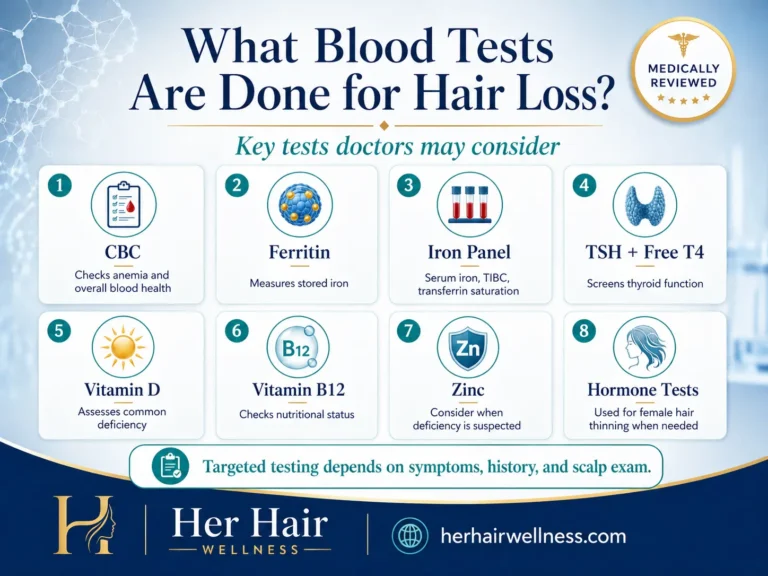
There is no single “best blood test for hair loss” for everyone. The right tests depend on your age, sex, medical history, diet, menstrual history, medications, pregnancy or postpartum status, and the pattern of hair loss.
Common blood tests for hair loss may include:
- Complete Blood Count, also called CBC or FBC
- Ferritin blood test
- Iron panel or iron studies
- Thyroid function tests, including TSH and Free T4
- Vitamin D blood test
- Vitamin B12 and folate tests
- Zinc level test
- Hormone blood tests
- Blood sugar or HbA1c, when metabolic imbalance is suspected
- Autoimmune screening tests, when clinically needed
Doctors usually do not order all tests for every patient. A good clinician chooses blood work based on symptoms and examination findings. For example, a woman with diffuse shedding, heavy menstrual bleeding, fatigue, and low dietary iron intake may need CBC, ferritin, and iron studies. A woman with hair thinning, acne, irregular periods, or unwanted facial hair may need hormone testing for androgen excess.
Recent research also supports a targeted approach. A 2024 study on telogen effluvium evaluated hemoglobin, ferritin, vitamin B12, vitamin D, thyroid function tests, zinc, copper, biotin, and selenium, showing that biochemical status can be relevant in selected hair-shedding patients (Durusu Turkoglu, I. N., et al. 2024).
Why Are Blood Tests Important for Hair Loss Diagnosis?
Blood tests are important because hair follicles are sensitive to changes inside the body. Nutrient deficiency, thyroid dysfunction, hormonal imbalance, anemia, inflammation, illness, and major physical or emotional stress can all influence the hair growth cycle.
In many cases, blood tests help answer one key question:
Is there a correctable internal factor contributing to hair shedding or thinning?
This matters because many people start supplements without knowing whether they are actually deficient. That approach can waste time, delay proper diagnosis, and sometimes cause harm. A medically guided blood test for hair loss can help identify what is truly relevant.
Blood tests may be especially useful when hair loss is:
- Sudden or excessive
- Diffuse across the scalp
- Persistent for more than three months
- Associated with fatigue or weakness
- Linked with heavy periods
- Associated with irregular menstrual cycles
- Accompanied by acne or unwanted facial hair
- Seen after restrictive dieting or rapid weight loss
- Occurring after illness, surgery, childbirth, or high stress
Blood testing should not replace scalp examination. Instead, it should support the overall diagnosis.
Is a Complete Blood Count CBC Needed for Hair Loss?
A Complete Blood Count, or CBC, is often one of the first blood tests considered when evaluating hair loss. It checks red blood cells, hemoglobin, hematocrit, white blood cells, and platelets.
For hair loss, CBC is mainly used to detect anemia or blood-related abnormalities. Low hemoglobin may suggest anemia, which can reduce oxygen delivery to tissues, including hair follicles. CBC can also help identify whether further testing for iron, vitamin B12, folate, or chronic disease is needed.
CBC may be especially useful if hair loss occurs with:
- Fatigue
- Weakness
- Dizziness
- Pale skin
- Shortness of breath
- Heavy menstrual bleeding
- Restrictive dieting
- History of anemia
However, CBC alone does not fully measure iron storage. A person may have low ferritin before hemoglobin becomes clearly abnormal. That is why doctors often pair CBC with ferritin and iron studies.
A large retrospective study of telogen effluvium patients found that hemoglobin was positively correlated with anagen hair ratio in female patients, suggesting that basic blood markers may be useful in selected cases (Arslan, H., & Gündüz, Ö. 2023).
Why Do Doctors Check Ferritin for Hair Loss?
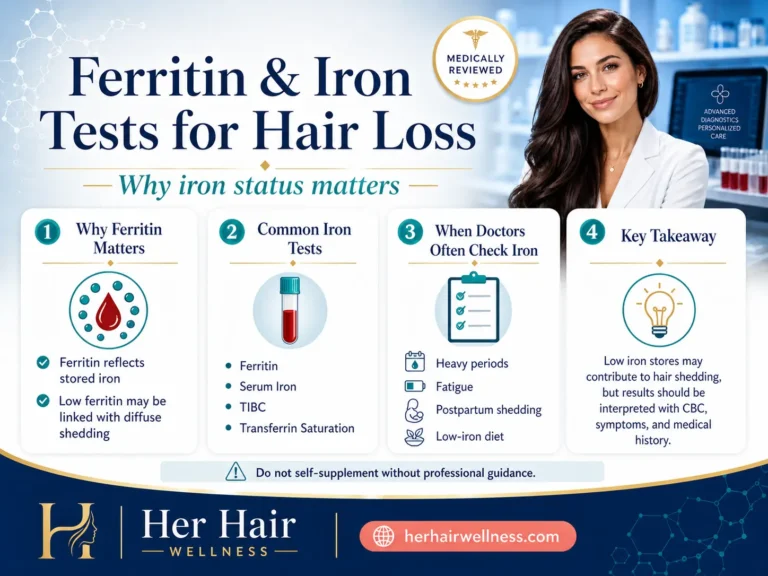
Ferritin is a protein that stores iron in the body. A ferritin blood test for hair loss helps evaluate iron reserves, not just circulating iron.
This is important because low ferritin may occur before clear anemia develops. A person may have a normal CBC but still have low iron stores. Low ferritin is commonly discussed in diffuse hair shedding, especially in menstruating women, postpartum women, vegetarians, vegans, and people with heavy periods or low dietary iron intake.
A ferritin test may be considered when there is:
- Diffuse hair shedding
- Heavy menstrual bleeding
- Fatigue or low energy
- Postpartum shedding
- Low dietary iron intake
- Vegan or vegetarian diet
- History of anemia
- Chronic telogen effluvium
Ferritin is clinically useful, but it must be interpreted carefully. It is also an acute-phase reactant, meaning it may rise during inflammation, infection, liver disease, or other inflammatory states. A 2023 clinical guide emphasized that ferritin reflects iron status but may also be elevated in inflammatory conditions, which can complicate interpretation in hair-loss patients (Zhang, D., et al. 2023).
This is why ferritin should not be interpreted as a single isolated number. It should be reviewed with CBC, iron studies, symptoms, menstrual history, inflammation markers if needed, and clinical examination.
Can an Iron Panel Help Find the Reason for Hair Shedding?
Yes. An iron panel for hair loss may help when CBC or ferritin results suggest iron deficiency or when symptoms point toward low iron stores.
An iron panel may include:
- Serum iron
- Ferritin
- Total iron-binding capacity, or TIBC
- Transferrin saturation
- Hemoglobin and hematocrit through CBC
Iron testing can help distinguish between iron deficiency, iron deficiency anemia, inflammation-related changes, and other iron metabolism patterns.
Low ferritin and iron deficiency are frequently investigated in telogen effluvium. A 2026 systematic review and meta-analysis reported significantly lower ferritin levels in telogen effluvium cases compared with controls, although results varied across studies (Ahmed, A., et al. 2026).
The important point is balance. Iron deficiency should not be ignored, but iron supplements should not be taken blindly either. Too much iron can be harmful. If your ferritin or iron results are abnormal, your healthcare provider should identify the reason before recommending treatment.
Which Thyroid Blood Tests Are Used for Hair Loss?
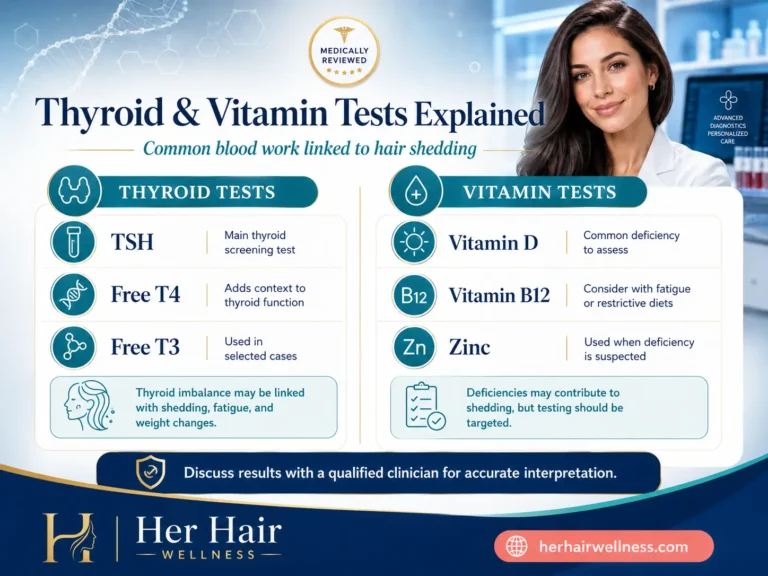
Thyroid function is closely connected with metabolism and the hair growth cycle. Both underactive and overactive thyroid conditions may be associated with hair shedding or thinning.
Common thyroid blood tests include:
- TSH, or Thyroid Stimulating Hormone
- Free T4
- Free T3, when clinically needed
- Thyroid antibodies, such as anti-TPO, in selected cases
A thyroid test for hair loss may be especially relevant if hair shedding occurs with:
- Fatigue
- Weight gain or weight loss
- Dry skin
- Constipation
- Heat or cold intolerance
- Anxiety or tremor
- Palpitations
- Irregular periods
- Family history of thyroid disease
TSH is often used as the first screening test, but it may not be the only test needed. If symptoms strongly suggest thyroid disease, your clinician may also check Free T4, Free T3, or thyroid antibodies.
Thyroid results should always be interpreted with symptoms. A borderline result may need repeat testing or additional thyroid markers, while a normal result may make thyroid disease less likely but does not automatically explain hair loss.
Should You Test Vitamin D for Hair Loss?
A vitamin D blood test for hair loss may be useful when there is diffuse shedding, low sun exposure, darker skin tone, indoor lifestyle, autoimmune history, fatigue, or general risk of deficiency.
Vitamin D plays a role in immune regulation and hair follicle biology. Research has found associations between lower vitamin D levels and certain hair loss conditions, including telogen effluvium. A 2026 systematic review and meta-analysis found significantly lower vitamin D levels in telogen effluvium cases compared with controls, while also noting high variability between studies (Ahmed, A., et al. 2026).
Vitamin D testing may be considered if you have:
- Limited sun exposure
- Covered clothing most of the time
- Darker skin tone
- Indoor lifestyle
- Bone or muscle aches
- Fatigue
- Autoimmune history
- Diffuse hair shedding
However, low vitamin D does not always mean it is the only cause of hair loss. It may be one contributing factor. Supplementation should be based on blood results and medical advice, because excessive vitamin D intake can be unsafe.
Can Low Vitamin B12 Cause Hair Thinning?
Vitamin B12 is important for red blood cell production, nerve function, and cellular health. A vitamin B12 blood test for hair loss may be considered when hair shedding is associated with fatigue, anemia, numbness, tingling, digestive issues, or restrictive eating.
B12 testing may be especially relevant for people who are:
- Vegan or vegetarian
- Taking metformin
- Taking long-term acid-reducing medication
- Experiencing fatigue or weakness
- Diagnosed with anemia
- Having digestive absorption problems
- Following restrictive diets
In the 2024 telogen effluvium biochemical study, vitamin B12 was included among the evaluated markers, along with ferritin, vitamin D, thyroid function tests, zinc, copper, biotin, and selenium (Durusu Turkoglu, I. N., et al. 2024).
B12 deficiency is not the most common explanation for every hair-loss case, but it should be considered when symptoms or risk factors are present.
Is Zinc Testing Useful for Hair Loss?
Zinc supports cellular growth, tissue repair, immune function, and normal follicle activity. A zinc blood test may be considered when hair loss occurs with restrictive dieting, digestive disease, chronic illness, malabsorption, bariatric surgery, or other signs of deficiency.
Zinc testing should be targeted rather than routine for every patient. Evidence on zinc and telogen effluvium is still mixed. Some studies report deficiencies in selected patients, while others do not find a strong relationship with objective hair parameters.
A large retrospective study found low ferritin and vitamin D deficiency were common in telogen effluvium patients, but zinc deficiency was less frequent in the available data, and not all micronutrients correlated strongly with hair parameters (Arslan, H., & Gündüz, Ö. 2023).
Zinc supplements should also be used carefully. Excessive zinc can interfere with copper balance and may create new health problems. Testing first is safer than guessing.
When Are Hormone Blood Tests Needed for Female Hair Loss?
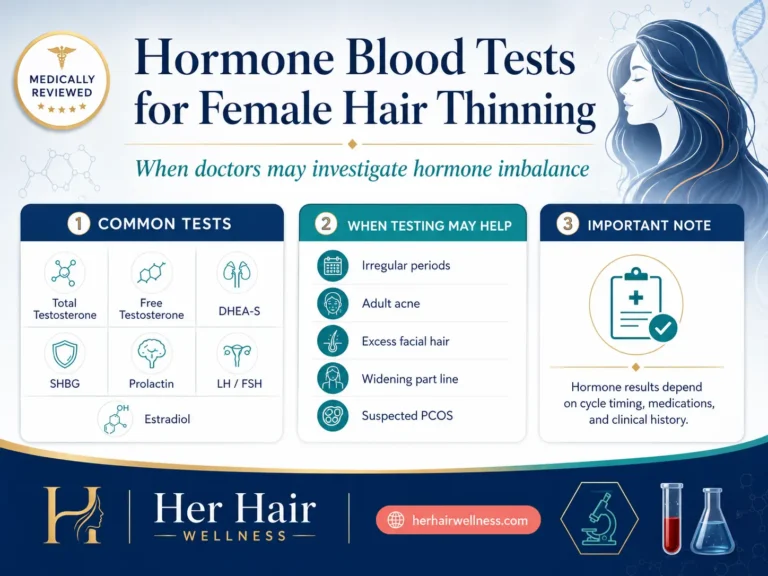
Hormone blood tests may be useful when female hair thinning appears with signs of androgen excess, PCOS, irregular cycles, acne, or unwanted facial hair.
Common hormone blood tests for female hair loss may include:
- Total testosterone
- Free testosterone
- DHEA-S
- SHBG, or Sex Hormone Binding Globulin
- Prolactin
- LH and FSH
- Estradiol
- Progesterone, depending on cycle timing
- 17-hydroxyprogesterone, in selected cases
Hormone testing may be considered when hair loss occurs with:
- Adult acne
- Irregular periods
- Excess facial or body hair
- PCOS suspicion
- Widening part line
- Crown thinning
- Sudden worsening of hair thinning
- Menopause or perimenopause changes
The 2023 International Evidence-Based Guideline for PCOS recommends careful clinical assessment of hyperandrogenism and notes that female pattern hair loss can be one sign to consider in the broader evaluation (Teede, H. J., et al. 2023).
The same guideline also states that LC-MS/MS assays are preferred over direct immunoassays for assessing total or free testosterone in the evaluation of biochemical hyperandrogenism because direct immunoassays may have limited accuracy and sensitivity (Teede, H. J., et al. 2023).
This is important for patients because hormone testing is not just about ordering a test. The quality of the assay, timing of the test, medications, menstrual cycle phase, and clinical signs all matter.
Can Blood Tests Detect Autoimmune or Inflammatory Hair Loss?
Blood tests can sometimes support the evaluation of autoimmune or inflammatory hair loss, but they do not replace scalp examination.
A doctor may consider autoimmune or inflammatory testing if hair loss is associated with:
- Patchy hair loss
- Scalp redness
- Scalp pain or burning
- Scaling
- Scarring
- Joint pain
- Mouth ulcers
- Photosensitive rash
- Unexplained fatigue
- Family history of autoimmune disease
Possible tests may include ANA, ESR, CRP, thyroid antibodies, or other autoimmune markers depending on the clinical picture. These are not routine tests for every person with hair loss.
Some inflammatory or scarring hair loss conditions require dermoscopy or scalp biopsy. Blood tests may help identify associated systemic disease, but the scalp findings often guide the diagnosis.
Do You Need Blood Sugar or Metabolic Tests for Hair Loss?
Blood sugar tests do not directly diagnose hair loss, but they may help evaluate metabolic conditions that can influence hormones and inflammation.
Your clinician may consider:
- Fasting blood glucose
- HbA1c
- Fasting insulin, in selected cases
- Lipid profile
- Liver function tests, if clinically relevant
These tests may be useful when hair thinning occurs with irregular cycles, weight changes, PCOS suspicion, insulin resistance, or other metabolic symptoms.
This is especially relevant in women with suspected PCOS because PCOS is not only a reproductive or cosmetic concern. It can also involve metabolic risk, androgen excess, and cycle irregularity (Teede, H. J., et al. 2023).
How Should You Prepare for Hair Loss Blood Tests?
Preparation depends on the exact tests ordered. Some blood tests require fasting, while others do not.
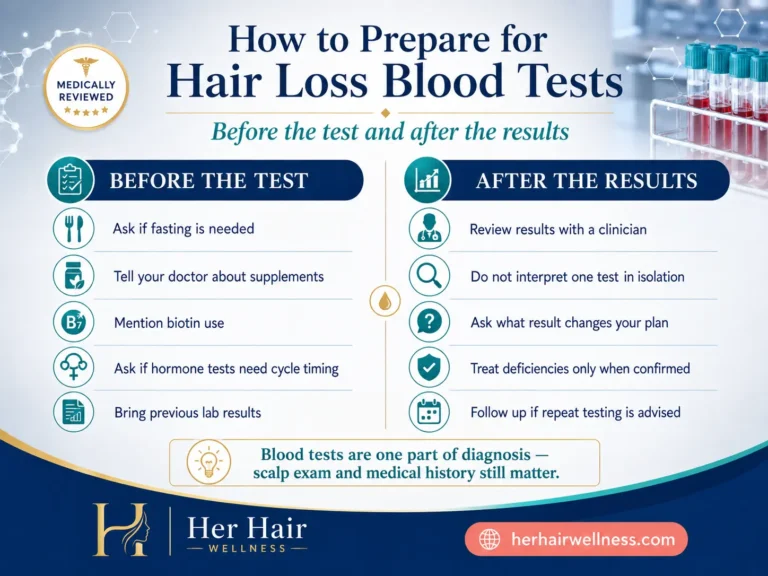
Before testing, ask your doctor or laboratory:
- Do I need to fast?
- Should hormone testing be done on a specific cycle day?
- Should I test in the morning?
- Can my supplements affect the results?
- Can my medications affect the results?
- Should I bring previous blood test reports?
- Which result would change my treatment plan?
Tell your clinician about all supplements, especially hair, skin, and nail supplements. Also mention iron, vitamin D, zinc, biotin, thyroid medication, hormonal contraception, anti-androgens, and any prescription medications.
Do not stop prescribed medication without medical advice. If a supplement may interfere with testing, your clinician or lab should guide you on what to do before the blood draw.
How Should You Understand Blood Test Results for Hair Loss?
Blood test results for hair loss should never be interpreted in isolation. A “normal” result may still require context, and an “abnormal” result does not always prove it is the only cause of hair loss.
For example:
- Ferritin may be technically within the lab range but still need clinical interpretation in a woman with heavy periods and diffuse shedding.
- Ferritin may also rise with inflammation, so normal or high ferritin does not always mean iron status is perfect (Zhang, D., et al. 2023).
- TSH may be borderline and require Free T4, Free T3, or thyroid antibody testing.
- Vitamin D may vary with sun exposure, season, skin tone, and geography.
- Hormone results may vary with menstrual cycle day, contraception, pregnancy, menopause, and medications.
- Zinc, copper, selenium, and B12 should be interpreted with diet, symptoms, and risk factors.
The safest principle is:
Treat the patient, not just the lab number.
Your results should be reviewed alongside your hair loss pattern, scalp examination, diet, medications, menstrual history, stress history, and overall health.
Can Blood Tests Diagnose Every Type of Hair Loss?
No. Blood tests cannot diagnose every type of hair loss.
Blood tests may help identify internal contributors such as:
- Low ferritin
- Iron deficiency
- Anemia
- Thyroid dysfunction
- Vitamin D deficiency
- Vitamin B12 deficiency
- Zinc deficiency
- Androgen excess
- Autoimmune or inflammatory markers
- Metabolic imbalance
However, some hair loss conditions require clinical examination, trichoscopy, pull test, or scalp biopsy. Blood tests may support diagnosis, but they are not always the final answer.
Blood tests may be more helpful for:
- Diffuse shedding
- Suspected telogen effluvium
- Hair loss with fatigue
- Hair loss with heavy periods
- Female hair thinning with hormonal signs
- Hair loss after restrictive dieting
- Hair loss with thyroid symptoms
- Hair loss with nutritional risk factors
Blood tests may be limited for:
- Genetic pattern hair loss
- Traction alopecia
- Hair shaft disorders
- Scarring alopecia
- Some inflammatory scalp diseases
- Alopecia areata without systemic symptoms
A 2026 systematic review supports the relevance of certain biomarkers such as ferritin and vitamin D in telogen effluvium, but also highlights variation between studies, which means testing should be personalized rather than automatic for everyone (Ahmed, A., et al. 2026).
What Should You Ask Your Doctor About Hair Loss Blood Tests?
Before ordering a hair loss blood test panel, ask your healthcare provider:
- Which blood tests are most relevant for my hair loss pattern?
- Should I test CBC, ferritin, iron, thyroid, vitamin D, B12, zinc, or hormones?
- Do my symptoms suggest anemia, thyroid disease, PCOS, or another condition?
- Should my hormone tests be timed with my menstrual cycle?
- Do I need testosterone testing with a more accurate method?
- Can my medications or supplements affect my results?
- Do I need a scalp examination, dermoscopy, pull test, or biopsy?
- If a deficiency is found, how will it be treated?
- When should blood tests be repeated?
- What result would actually change my treatment plan?
These questions help make testing more accurate, more useful, and more personalized.
Key Takeaway: What Do Blood Tests for Hair Loss Really Tell You?
Blood tests for hair loss can provide important clues, especially when shedding is sudden, diffuse, persistent, or linked with fatigue, heavy periods, dietary restriction, thyroid symptoms, acne, irregular cycles, or hormonal signs.
The most commonly discussed tests include:
- CBC
- Ferritin
- Iron panel
- TSH and thyroid hormones
- Vitamin D
- Vitamin B12
- Zinc
- Hormone blood tests
- Blood sugar or metabolic tests
- Autoimmune testing in selected cases
The goal is not to order every possible test. The goal is to identify correctable internal factors, avoid unnecessary supplements, and build a safe, evidence-based plan.
A good hair loss evaluation should combine medical history, scalp examination, hair pattern assessment, targeted blood work, and professional interpretation. When blood tests are used correctly, they can help move the conversation from guessing to evidence-based care.
Medical Disclaimer
This article is for educational purposes only and should not be used as a substitute for professional medical advice, diagnosis, or treatment. Hair loss can have many causes, and blood test results should always be interpreted by a qualified healthcare professional. Always consult your doctor, dermatologist, or licensed medical provider before starting any treatment, supplement, or medication.
Frequently Asked Questions(FAQs)
1. What blood tests are commonly done for hair loss?
Common blood tests for hair loss include CBC, ferritin, iron panel, thyroid tests such as TSH and Free T4, vitamin D, vitamin B12, zinc, and hormone tests when needed.
2. Can low ferritin cause hair loss?
Low ferritin means low iron stores, which may contribute to diffuse hair shedding in some people, especially women with heavy periods, low iron intake, or a history of anemia.
3. Can thyroid problems cause hair loss?
Yes. Both underactive and overactive thyroid conditions may contribute to hair thinning or shedding. Doctors often check TSH and sometimes Free T4 or thyroid antibodies.
4. Do blood tests diagnose every type of hair loss?
No. Blood tests can help find internal factors such as deficiencies or hormone imbalance, but some hair loss types need scalp examination, dermoscopy, pull test, or biopsy.
5. Should I take supplements before getting blood tests?
No. It is better to test first and take supplements only if a deficiency is found. Taking iron, zinc, vitamin D, or other supplements without testing may be unnecessary or harmful.
References
- Ahmed, A., Alali, A., Alahmadi, M., Alghamdi, S., Khawaji, Z., Humedi, A., & Alqurashi, S. (2026). Association between serum trace elements and telogen effluvium: A systematic review and meta-analysis. Skin Appendage Disorders. doi: 10.1159/000550921
- Durusu Turkoglu, I. N., Turkoglu, A. K., Soylu, S., Gencer, G., & Duman, R. (2024). A comprehensive investigation of biochemical status in patients with telogen effluvium: Analysis of Hb, ferritin, vitamin B12, vitamin D, thyroid function tests, zinc, copper, biotin, and selenium levels. Journal of Cosmetic Dermatology, 23(12), 4277–4284. doi: 10.1111/jocd.16512
- Arslan, H., & Gündüz, Ö. (2023). Micronutrient deficiencies and digital computerized phototrichogram analysis in telogen effluvium: A retrospective correlation study in a tertiary medical center. Dermatology Practical & Conceptual, 13(3), e2023202. doi: 10.5826/dpc.1303a202
- Zhang, D., LaSenna, C., & Shields, B. E. (2023). Serum ferritin levels: A clinical guide in patients with hair loss. Cutis, 112(2), 62–67. doi: 10.12788/cutis.0837
- Teede, H. J., Tay, C. T., Laven, J. J. E., Dokras, A., Moran, L. J., Piltonen, T. T., Costello, M. F., Boivin, J., Redman, L. M., Boyle, J. A., Norman, R. J., Mousa, A., & Joham, A. E. (2023). Recommendations from the 2023 International Evidence-based Guideline for the Assessment and Management of Polycystic Ovary Syndrome. The Journal of Clinical Endocrinology & Metabolism, 108(10), 2447–2469. doi: 10.1210/clinem/dgad463