

Female Hair Loss: Causes, Types, and Early Signs
Written by: Dr. Muhammad Ihsan Ullah, PhD
Medically reviewed by: Dr. Muhammad Mudassar Hassan Bhatti, MD (Dermatology)
Last updated on February 13, 2026
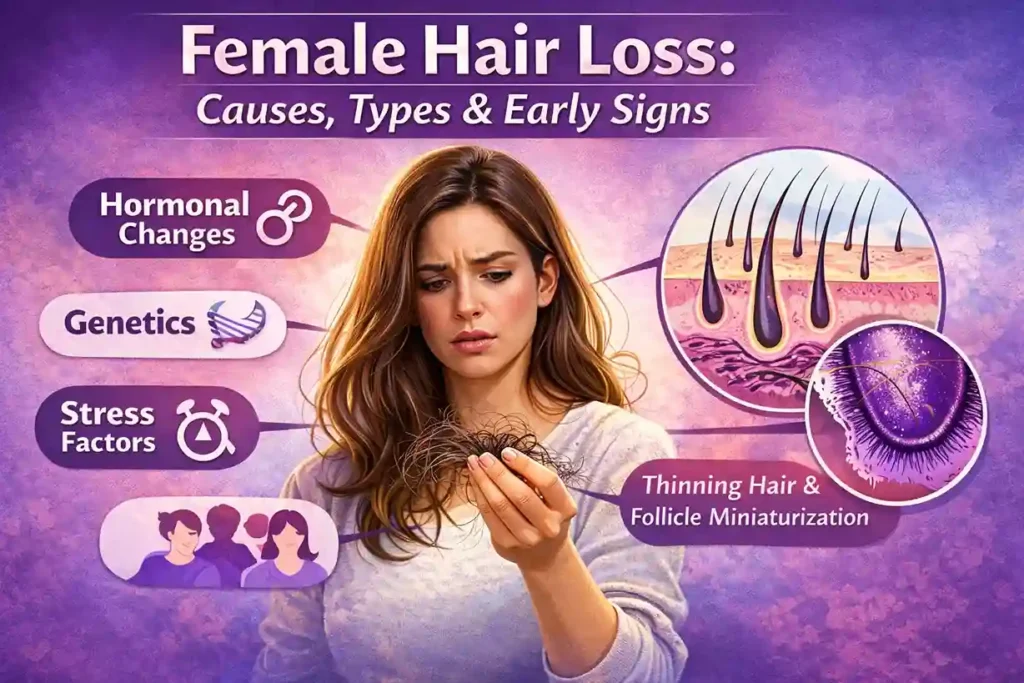
Female hair loss is not just a cosmetic concern. It is often a visible signal that the hair follicle, scalp, or the body’s internal balance has changed. Many women notice it subtly at first: a widening hair part, a ponytail that feels thinner, or extra hair shedding during washing. Others experience sudden, diffuse shedding after illness, stress, childbirth, or rapid weight loss.
Two biological principles explain most patterns of hair loss in women:
Hair grows in cycles—anagen (growth), catagen (transition), and telogen (rest/shedding). When many follicles shift into telogen at the same time, noticeable shedding occurs (Karakoyun et al., 2025).
Some conditions cause follicle miniaturisation, where each new hair becomes thinner and shorter over time, leading to gradual thinning and reduced density (Chen, et al. 2025).
Causes of Female Hair Loss
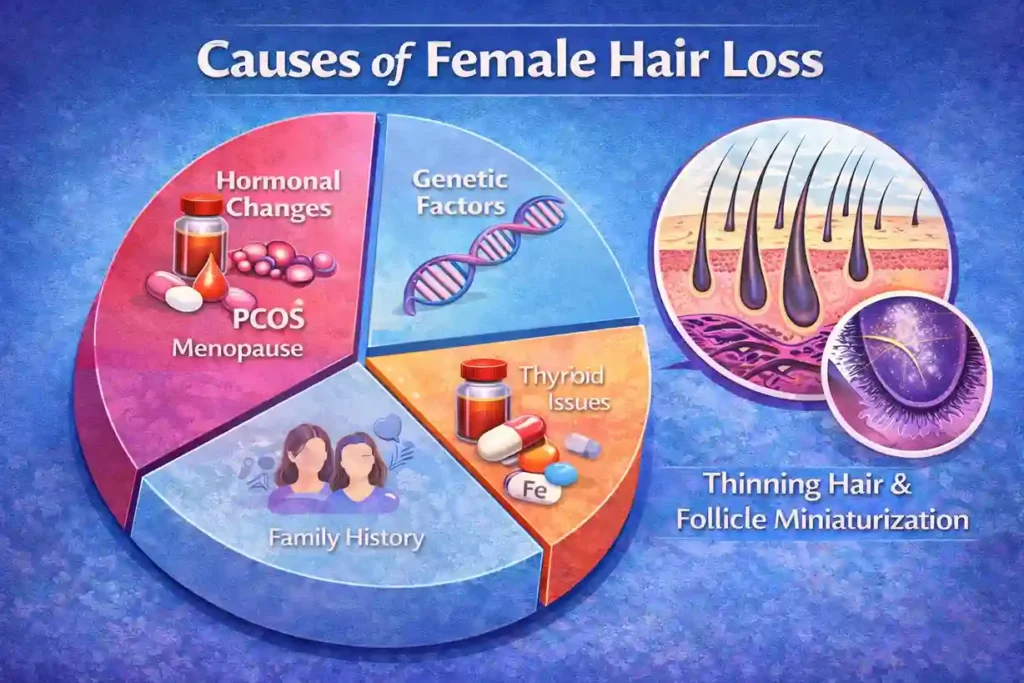
Female hair thinning reasons usually involve a combination of factors rather than a single cause. These causes generally fall into five overlapping categories.
Hormonal Causes
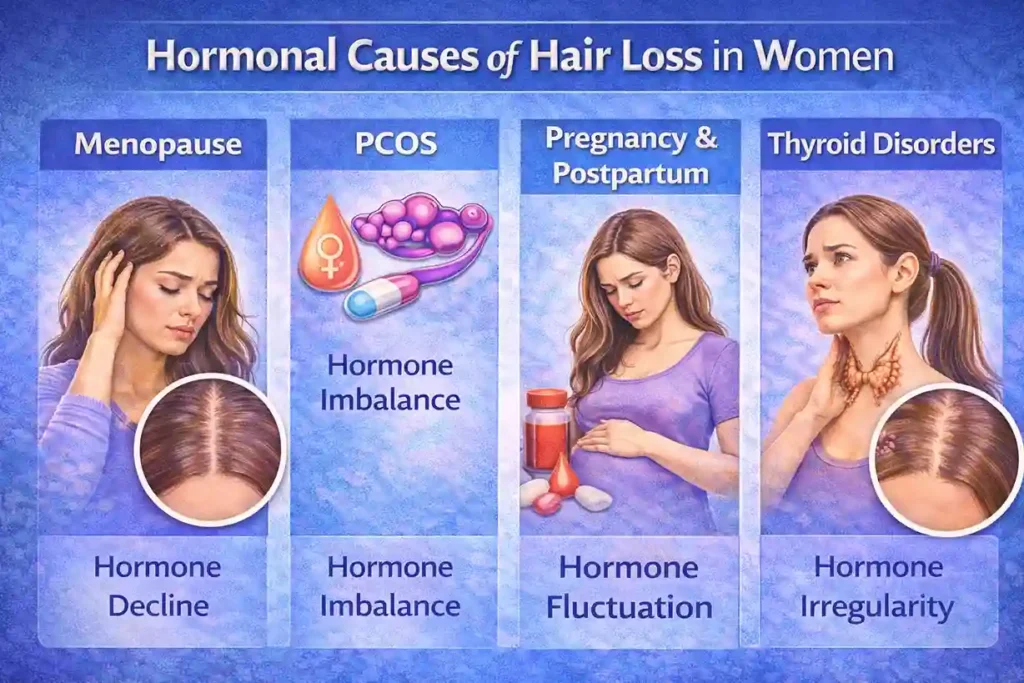
Hormones play a major role in regulating the hair growth cycle. Changes in hormonal patterns can shorten the growth phase or increase shedding.
Postpartum hormonal shifts
After pregnancy, oestrogen levels drop, and many follicles enter the telogen phase together, causing diffuse shedding. This is commonly noticed several weeks to months after delivery (Karakoyun et al., 2025).
Perimenopause and menopause-related changes
Fluctuating and declining oestrogen levels may lead to finer hair, reduced density, and increased scalp visibility, especially at the crown. These changes may overlap with genetically driven thinning (Chen et al., 2025).
Androgen sensitivity
Some women have hair follicles that are more sensitive to androgen signalling. Even without abnormal hormone levels on blood tests, this sensitivity can contribute to progressive follicle miniaturisation (Chen et al., 2025).
PCOS-related hair thinning
Polycystic ovary syndrome may influence hair follicles through androgen-related pathways and metabolic stress. Not all women with PCOS develop hair loss, but the association remains clinically important (Chen, et al. 2025).
Genetic Causes
Genetics strongly influence female pattern hair loss, the most common chronic form of hair loss in women. Many women report similar thinning patterns in female relatives.
Typical genetic features include:
- Gradual thinning over years
- Widening centre part
- Reduced hair density at the crown
- Progressive follicle miniaturisation (Chen et al., 2025)
Medical and Biochemical Causes
Certain medical and biochemical factors can disrupt the hair growth cycle and increase shedding.
Low ferritin and iron status
Ferritin reflects iron stores. Studies show that many women with telogen effluvium have low ferritin levels, which may worsen shedding when combined with other stressors (Karakoyun et al., 2025).
Thyroid dysfunction
Abnormal thyroid function can alter hair texture and increase diffuse shedding. Thyroid-related hair loss typically presents as overall thinning rather than patchy loss (Karakoyun et al., 2025).
Vitamin D deficiency
Research has shown lower vitamin D levels in women with non-scarring alopecia, including female pattern hair loss, telogen effluvium, and alopecia areata (Chen et al., 2024).
Autoimmune activity
Autoimmune processes can target hair follicles directly, most notably in alopecia areata, leading to sudden, localised hair loss (Sibbald, et al. 2023).
Stress and Lifestyle Causes
Stress is a well-recognised physiological trigger for hair shedding.
Common stress-related contributors include:
- Severe illness or fever
- Surgery
- Rapid weight loss
- Prolonged calorie restriction
- Chronic sleep disruption
In telogen effluvium, shedding often begins weeks after the triggering event because follicles must complete the growth cycle before shedding becomes visible (Karakoyun, et al. 2025).
Hair and Scalp-Related Causes
Traction from tight hairstyles
Repeated tension from tight braids, buns, ponytails, or extensions can lead to traction alopecia. Early stages may be reversible, but prolonged traction increases the risk of permanent hair loss (Pulickal et al., 2023).
Scalp inflammation and irritation
Inflammatory scalp conditions may increase shedding and cause discomfort, even when hair loss is not immediately obvious.
Types of Female Hair Loss

Identifying the type of hair loss helps explain the pattern, progression, and early signs.
Female Pattern Hair Loss
This is the most common long-term hair loss pattern in women.
Typical features include:
- Widening centre part
- Crown thinning
- Reduced hair volume
- Gradual progression over time (Chen et al., 2025)
Telogen Effluvium
Telogen effluvium causes sudden, diffuse shedding due to premature shifting of follicles into the telogen phase.
Key features:
- Increased daily hair shedding
- Hair loss across the entire scalp
- Often triggered by stress, illness, hormonal changes, or nutritional factors (Karakoyun et al., 2025)
Alopecia Areata
Alopecia areata is an immune-mediated, non-scarring hair loss condition.
Common features:
- Sudden patchy hair loss
- Smooth scalp surface
- Unpredictable course (Sibbald, et al. 2023)
Traction Alopecia
Traction alopecia results from chronic mechanical stress on hair follicles.
Typical signs include:
- Hairline thinning
- Broken hairs
- Reduced density in tension areas
- Scalp tenderness (Pulickal et al., 2023)
Scarring vs Non-Scarring Hair Loss
Non-scarring hair loss includes female pattern hair loss, telogen effluvium, alopecia areata, and early traction alopecia. Follicles remain intact, and regrowth may occur.
Scarring hair loss involves permanent follicle damage and is not the focus of this article.
Early Signs of Female Hair Loss

Changes in Hair Density
- Thinner ponytail
- Reduced volume
- Scalp becoming more visible in bright light
Changes in Hair Part or Hairline
- Widening centre part
- Crown thinning
- Hairline recession in traction-related cases
Excessive Daily Hair Shedding
- Increased hair in shower drain
- Hair on pillow or clothing
- Diffuse shedding rather than patchy loss
Texture and Growth Changes
- Finer hair strands
- Slower hair growth
- Increased breakage
Scalp Visibility or Sensitivity
- Visible scalp
- Tenderness in tension areas
- Smooth patches in alopecia areata
Medical Disclaimer
This content is provided for educational and informational purposes only and is not intended to replace professional medical advice, diagnosis, or treatment. Female hair loss can have multiple underlying causes, and individual situations vary. If hair loss is sudden, progressive, or concerning, readers should consult a qualified healthcare professional or dermatologist for personalised evaluation.
Frequently Asked Questions (FAQs)
1.What is the most common cause of hair loss in women?
Female pattern hair loss is the most common cause and usually develops gradually with thinning at the crown or a widening hair part.
2.What are the earliest signs of female hair loss?
Early signs include reduced ponytail volume, widening of the hair part, increased daily shedding, and hair that feels finer than before.
3.Is sudden hair shedding always permanent?
No. Sudden, diffuse shedding is often related to telogen effluvium and may be temporary, depending on the underlying trigger.
4.Can hair loss happen without visible bald spots?
Yes. Many women experience diffuse thinning or reduced density without clear bald patches.
5.Does female hair loss always indicate a serious health problem?
Not always. Hair loss can be related to genetics, hormonal shifts, stress, or lifestyle factors, but persistent or worsening loss should be evaluated.
References
- Chen, S., Li, L., Ding, W., Zhu, Y., & Zhou, N. (2025). Androgenetic alopecia: An update on pathogenesis and pharmacological treatment. Drug Design, Development and Therapy, 19, 7349–7363. https://doi.org/10.2147/DDDT.S542000
- Karakoyun, Ö., Ayhan, E., & Yıldız, İ. (2025). Retrospective review of 2851 female patients with telogen effluvium: A single-centre experience. Journal of Cosmetic Dermatology.
- Sibbald, C. (2023). Alopecia areata: An updated review for 2023. Skin Therapy Letter.
- Pulickal, J. K., & Wang, M. (2023). Traction alopecia. In StatPearls. StatPearls Publishing.
- Chen, Y., et al. (2024). Serum 25-hydroxyvitamin D in non-scarring alopecia: A systematic review and meta-analysis. Journal of Cosmetic Dermatology.