

Seasonal Hair Shedding in Women: What Science Says, Why It Happens & What Matters Most
Written by: Dr. Muhammad Ihsan Ullah, PhD
Medically reviewed by: Dr. Muhammad Mudassar Hassan Bhatti, MD (Dermatology)
Last updated on February 13, 2026
Hair shedding, especially in women, can be confusing and anxiety-provoking. This comprehensive, medically grounded article unpacks seasonal hair shedding in women, showing the latest research, trusted clinical insights, and actionable takeaways.
Understanding Seasonal Hair Shedding in Women

Seasonal hair shedding refers to periods of increased hair shedding linked to changes in environmental conditions and the hair growth cycle at specific times of the year. Instead of indicating permanent hair loss, seasonal shedding is often a normal fluctuation in the hair growth cycle itself (Norman, R. J., et al. 2023).
Human hair grows in recurring phases: anagen (growth), catagen (transition), telogen (resting) and exogen (shedding). Seasonal patterns may influence how many hair follicles remain in the telogen phase, leading to noticeable increases in hair shedding during particular months (Hsiang, E. Y. 2018).
Seasonal Patterns & Scientific Evidence

🔹 Annual Cycles: Summer → Autumn Peaks
The largest research involving 823 healthy women over a 6-year period found a clear annual periodicity in hair shedding. The proportion of hairs in the telogen phase peaked in summer, resulting in the highest shedding later in the year, especially in late summer and autumn (Norman, R. J., et al. 2023). Studies in dermatology also note that while peak shedding periods vary slightly across geographic regions, the overall pattern of more shedding in late summer to autumn and a smaller peak in spring is consistent (Kunz, M. 2009).
Key Insight: Seasonal hair shedding is not random; it reflects an annual rhythm in hair follicle biology that aligns with environmental changes (Hsiang, E. Y. 2018).
🔹 Why Seasonal Peaks Occur
Multiple hypotheses explain these patterns:
Environmental stimuli (temperature, daylight): Seasonal changes, especially the transition from summer heat to cooler autumn conditions, may trigger more hairs into the telogen phase, increasing shedding later (Harklinikken, 2020).
Photoperiod (daylight variation): Changes in daylight hours may influence the cycle of hair growth and resting phases (Kunz, M. 2009).
Historical biology: Some researchers believe this seasonal cycle may be preserved from earlier evolutionary patterns where hair played a role in thermoregulation (Harklinikken, 2020).
Seasonal Hair Shedding Is Not Hair Loss
It’s important to distinguish seasonal hair shedding from chronic hair loss conditions such as androgenetic alopecia or autoimmune hair loss (e.g., alopecia areata). Seasonal shedding is typically temporary and does not reflect permanent follicle damage (Norman, R. J., et al. 2023).
Seasonal Hair Shedding vs. True Hair Loss
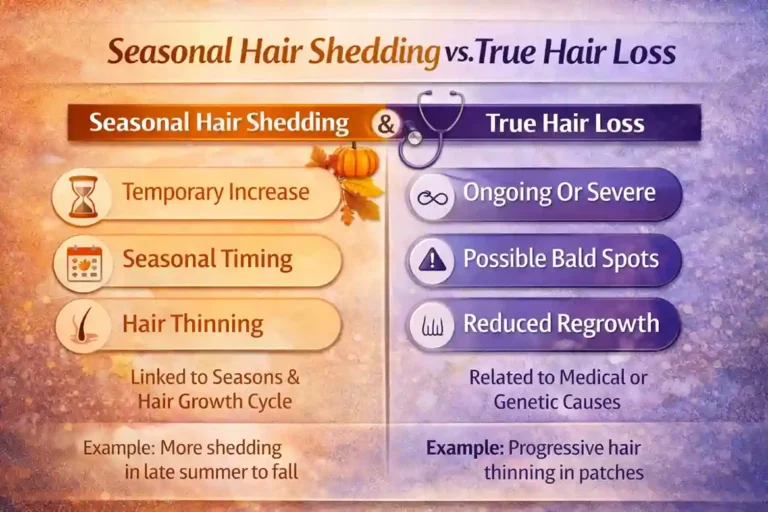
- Seasonal Hair Shedding (telogen effluvium type):
More hairs in telogen
• Diffuse shedding across the scalp
• Usually reverses in weeks to months
• Often occurs in late summer/fall and spring
• Not permanent - Chronic Hair Loss (e.g., pattern hair loss):
Hair shaft miniaturisation
• Gradual thinning over months/years
• Progressive without intervention (Harklinikken, 2020)
What Latest Research Tells Us
Study Highlights
- A landmark study reported that maximum telogen hair rates occurred in summer, with secondary smaller peaks in spring, while shedding rates were lowest in late winter months (Norman, R. J., et al. 2023).
- Additional analysis via Google Trends supports the notion that searches for hair loss increase during summer and autumn months, potentially mirroring real seasonal shedding experiences (Kunz, M. 2009).
Research Consensus: While some variations exist, a trend of increased hair shedding after summer persists across populations and geographies (Hsiang, E. Y. 2018).
Recognizing Normal Seasonal Shedding

Wondering whether what you’re experiencing is normal seasonal shedding or something else? Common signs include:
 Noticeable increase in hair shedding during late summer → autumn Diffuse shedding without bald patches No significant increase in scalp visibility Shedding decreases or returns to baseline after a few months
If shedding continues beyond a few months or accelerates progressively, it may indicate a need for further medical evaluation.
When to Seek a Dermatology Consultation
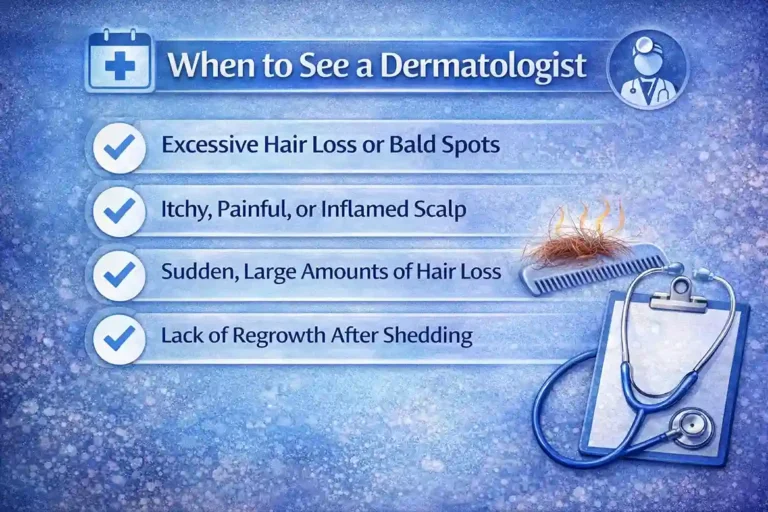
Although seasonal shedding is usually benign, you should consider professional assessment if:
🔹 Shedding persists for more than 3 months.
🔹 Bald patches or significant thinning appears.
🔹 Family history of hair loss disorders
🔹 Signs of miniaturisation (thinner hairs)
A dermatologist can help differentiate between seasonal telogen effluvium, pattern hair loss, alopecia areata, and other conditions (Kunz, M. 2009).
Medical Disclaimer
The information provided in this article is for general informational purposes only and should not be considered as medical advice. If you are concerned about hair shedding or other hair-related issues, please consult with a qualified healthcare professional or dermatologist for personalised guidance and diagnosis.
Frequently Asked Questions (FAQs)
1. Is seasonal hair shedding common in women?
Yes, seasonal hair shedding is a natural phenomenon, often occurring during the transition from summer to autumn, as part of the normal hair growth cycle.
2. When does hair shedding peak in women?
Hair shedding typically peaks in late summer to autumn, with a smaller peak sometimes occurring in spring.
3. How can I tell if my hair shedding is normal?
If your hair sheds more during specific seasons but returns to normal after a few months, it’s likely seasonal shedding. If shedding persists or increases progressively, consider consulting a dermatologist.
4. Does seasonal hair shedding affect all women equally?
No, while many women experience seasonal shedding, the extent can vary based on genetics, environmental factors, and overall health.
5. What can I do to manage seasonal hair shedding?
Maintaining a balanced diet, reducing stress, and ensuring proper hair care can help manage seasonal shedding. If the shedding is excessive, seeking professional advice may be beneficial.
References
- Norman, R. J., et al. (2023). Seasonality of hair shedding in healthy women.
- Hsiang, E. Y. (2018). Seasonal hair shedding: What research tells us. Journal of Dermatology
- Kunz, M. (2009). Seasonality of hair loss: A time series analysis of Google Trends data (2004 to 2016). British Journal of Dermatology.
- (2020). The science behind seasonal hair loss.