

Spironolactone for Female Hair Loss: Results Timeline, Success Rate, Dosage, and Side Effects Explained
Written by:
Dr. Muhammad Ihsan Ullah, PhD
(Medical Writer | Researcher)
Medically Reviewed by:
Dr. Muhammad Mudassar Hassan Bhatti, MD
(Dermatology)
Medical Reviewer, HerHairWellness.com
Introduction

Hair thinning and excessive shedding can be deeply frustrating for women, especially when changes become visible around the part line, crown, temples, or overall hair density. Female pattern hair loss (FPHL), also known as female androgenetic alopecia, is one of the most common causes of progressive hair thinning in women and is often linked to increased sensitivity of scalp hair follicles to androgen hormones.
Among the prescription options discussed for androgen-related female hair loss, spironolactone has become one of the most widely used treatments by dermatologists because of its antiandrogen properties and ability to reduce androgen-related effects on hair follicles (1).
However, many women considering spironolactone have the same important questions:
- Does spironolactone really work for female hair loss?
- How long does spironolactone take to show results?
- What happens after 3 or 6 months of treatment?
- What are the possible side effects?
- Is spironolactone safe for long-term use?
This evidence-based guide explains spironolactone for female hair loss, including its mechanism of action, expected timeline, realistic results, dosage considerations, safety profile, and frequently asked questions.
The goal is not to promise unrealistic regrowth but to provide a scientifically accurate understanding of how this medication works, who may benefit, and what women should expect during treatment.
Quick Answer: What Results Can You Expect From Spironolactone for Female Hair Loss?
Spironolactone may help women with androgen-related hair thinning by reducing androgen activity at the hair follicle level. Most women do not notice immediate changes because hair growth occurs slowly. Early improvement may appear after 3–6 months, while more noticeable changes in hair density may require 6–12 months of consistent treatment. Individual results depend on the cause of hair loss, hormonal sensitivity, dosage, and whether other therapies are used.
Key points:
- Spironolactone works mainly by reducing androgen effects involved in female pattern hair loss.
- Some women experience reduced shedding after several months.
- Improvement in thickness and density usually takes longer than a few weeks.
- Continued treatment may be required to maintain benefits.
- Medical supervision is important because spironolactone affects hormones, blood pressure, and potassium balance.
Spironolactone Hair Loss Timeline: When Do Women Usually Notice Results?
Time Period | What Women May Experience |
First month | The body begins adjusting; visible hair regrowth is usually unlikely |
2–3 months | Some women may notice reduced shedding |
4–6 months | Early improvement in thickness or hair retention may appear |
6–12 months | More noticeable changes in density may occur in responders |
Beyond 12 months | Maintenance treatment may help preserve results |
What Is Spironolactone and Why Is It Used for Female Hair Loss?
Spironolactone (brand name Aldactone) is a medication originally developed as a potassium-sparing diuretic and mineralocorticoid receptor antagonist. It is commonly used in cardiovascular medicine for conditions such as hypertension, fluid retention, and heart-related conditions.
In dermatology, spironolactone is frequently prescribed off-label for hormone-related conditions, including:
- Female pattern hair loss (FPHL)
- Female androgenetic alopecia
- Hormonal acne
- Hirsutism (excess unwanted facial or body hair)
The reason spironolactone is considered for female hair loss is its ability to reduce the biological effects of androgens, particularly in women whose hair follicles are sensitive to hormones such as testosterone and dihydrotestosterone (DHT).
How Does Spironolactone Help Female Hair Loss?
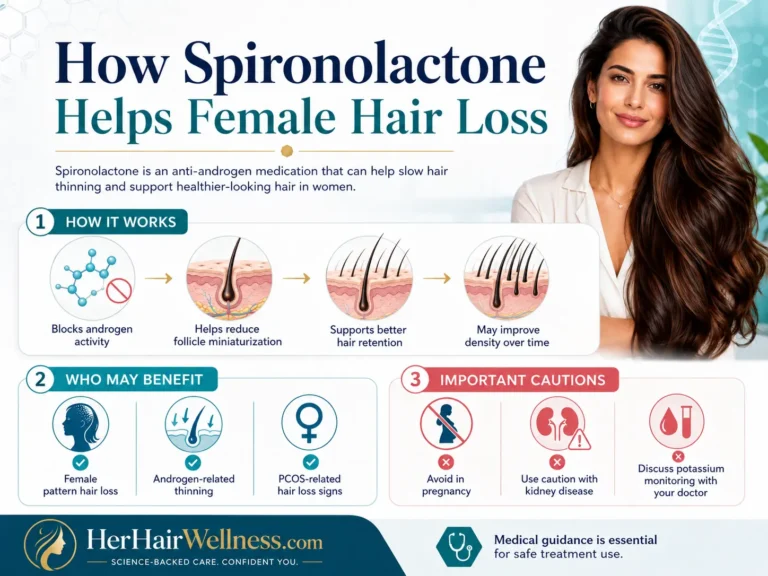
How does spironolactone block DHT and improve hair growth?
A common search query from women considering treatment is:
“How does spironolactone help female hair loss?”
To understand this, it is important to understand the relationship between hormones and hair follicles.
Hair follicles naturally go through a growth cycle:
- Anagen phase:active hair growth phase
- Catagen phase:transition phase
- Telogen phase:resting and shedding phase
In genetically susceptible women, androgen signaling may contribute to:
- Shortening of the growth phase
- Progressive follicle miniaturization
- Production of thinner hair shafts
- Reduced scalp coverage
Spironolactone may help by reducing androgen activity through several mechanisms.
Antiandrogen effect at the hair follicle
Spironolactone acts as an androgen receptor antagonist, meaning it reduces the ability of androgens to activate receptors in certain tissues.
At the scalp level, this may decrease androgen-driven changes associated with female pattern hair loss.
Reduction of androgen-related follicle miniaturization
Women with androgen-sensitive hair follicles may experience gradual shrinking of follicles over time.
Spironolactone may help:
- Slow progression of thinning
- Protect existing follicles
- Improve hair retention
However, it does not create new hair follicles. The best outcomes are usually seen when treatment begins before advanced follicle loss occurs.
Does Spironolactone Regrow Hair in Females?
One of the most searched questions is:
“Does spironolactone regrow hair in females?”
The answer depends on what is causing the hair loss.
For women with female pattern hair loss related to androgen sensitivity, spironolactone may:
- Reduce excessive shedding
- Improve hair density
- Increase the thickness of miniaturized hairs
- Slow further progression
A systematic review and meta-analysis evaluating oral spironolactone for female pattern hair loss found that approximately 56.6% of patients showed improvement, with better outcomes observed in some patients receiving combination treatment. However, responses varied significantly between individuals. (2)
This means spironolactone can be helpful, but it is not a guaranteed solution for every woman.
How Effective Is Spironolactone for Female Hair Loss?
What percentage of women see improvement with spironolactone?
The effectiveness of spironolactone depends on several factors:
Women more likely to respond may include those with:
- Female pattern hair loss
- Signs of androgen sensitivity
- Hormonal imbalance
- Increased scalp oil production
- PCOS-associated androgen excess
Factors that may reduce response include:
- Incorrect diagnosis
- Severe long-standing follicle miniaturization
- Untreated nutritional deficiencies
- Autoimmune hair loss
- Telogen effluvium from stress or illness
A proper diagnosis is essential because female hair loss can have multiple causes, and spironolactone mainly targets androgen-related mechanisms.
Spironolactone Female Hair Loss Timeline: Month-by-Month Expectations
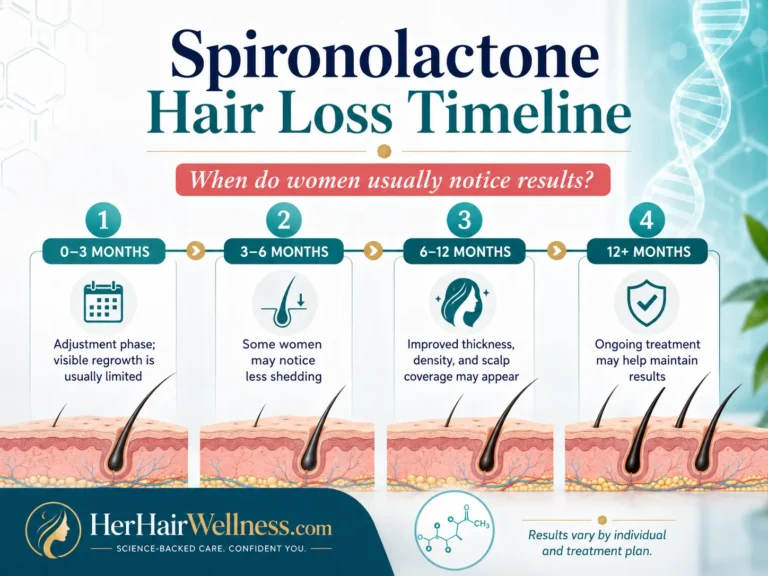
How long does spironolactone take to work for hair loss?
Many women expect results within weeks, but hair biology does not work that quickly.
A realistic timeline:
Months 0–3: Adjustment Phase
During the first few months:
- Hormonal pathways begin adjusting
- Hair shedding may remain unchanged
- Visible regrowth is usually limited
This period requires patience because scalp follicles operate on a slow biological cycle.
Months 3–6: Early Response Phase
Some women may begin noticing:
- Reduced daily shedding
- Less hair loss during washing or brushing
- Improved hair stability
Changes may be subtle at first.
Months 6–12: Visible Improvement Phase
Women who respond may notice:
- Better hair density
- Improved thickness
- More scalp coverage
- Stronger-looking hair strands
Clinical observations suggest longer treatment durations may provide better evaluation of response compared with short-term use. (2)
After 12 Months: Maintenance Phase
Female pattern hair loss is usually a chronic condition.
If spironolactone is effective, continued treatment may be needed to maintain benefits.
Stopping treatment may allow androgen-related thinning to gradually return in some women.
What Dosage of Spironolactone Is Used for Female Hair Loss?
What dose of spironolactone helps hair growth?
One of the most common searches is:
“Spironolactone dosage for female hair loss”
There is no single dose that works for every woman. Dermatologists usually individualize the dose depending on:
- Severity of female pattern hair loss
- Age
- Hormonal status
- Blood pressure
- Other medications
- Side effect tolerance
- Medical history
Common doses used in clinical practice may include:
- 25 mg daily
- 50 mg daily
- 100 mg daily
- Higher doses in selected patients under specialist supervision
Many clinicians prefer starting with a lower dose and gradually adjusting depending on response and tolerability.
The goal is not to use the highest possible dose, but to identify the lowest effective dose that provides benefit with acceptable safety.
Women should never increase, decrease, or stop spironolactone without medical guidance.
Can Spironolactone Cause Initial Hair Shedding?
Does spironolactone make hair loss worse at first?
A common concern among women starting treatment is:
“Does spironolactone cause initial hair shedding?”
Unlike minoxidil, where temporary shedding is commonly discussed, spironolactone is not generally associated with a predictable initial shedding phase.
However, some women may notice continued shedding after starting treatment because:
- Existing hair follicles are still progressing through their natural cycle
- Female pattern hair loss may take months to stabilize
- Another condition such as telogen effluvium may also be present
- Multiple treatments may have been started simultaneously
If severe or sudden hair loss occurs after starting spironolactone, medical evaluation is recommended to identify the cause.
What Are the Side Effects of Spironolactone for Female Hair Loss?
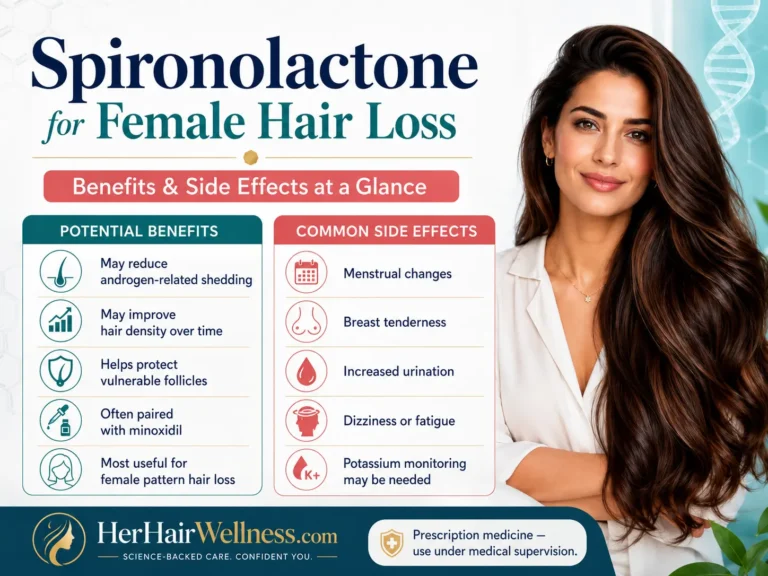
What are spironolactone side effects for hair loss women?
Safety is one of the most important topics for women considering spironolactone.
Because spironolactone affects androgen pathways and fluid balance, some women may experience side effects.
The most commonly discussed side effects include:
Menstrual Changes
Because spironolactone has hormonal effects, some women may experience:
- Irregular periods
- Spotting
- Changes in menstrual flow
These effects are often dose-related and may improve with dose adjustment or appropriate medical management.
Breast Tenderness
Some women report:
- Breast sensitivity
- Breast discomfort
- Mild swelling
This occurs because spironolactone can influence hormonal signaling.
Increased Urination
Since spironolactone is a potassium-sparing diuretic, some women may notice:
- More frequent urination
- Increased thirst
- Changes in fluid balance
Fatigue or Dizziness
Some women may experience:
- Tiredness
- Lightheadedness
- Lower blood pressure symptoms
This may be more noticeable in individuals who already have low blood pressure.
Increased Potassium Levels
Because spironolactone reduces potassium loss from the kidneys, potassium levels can increase in certain individuals.
Healthcare providers may consider monitoring:
- Serum potassium
- Kidney function
- Blood pressure
Monitoring is especially important for women who:
- Have kidney disease
- Take medications affecting potassium
- Have cardiovascular conditions
- Are older or have additional health risks
Is Spironolactone Safe for Long-Term Use in Women?
How long should women take spironolactone for hair loss?
Many women ask:
“Is spironolactone safe long term for hair loss?”
Spironolactone can be used long term in appropriately selected patients under medical supervision.
However, long-term treatment decisions should consider:
- Treatment effectiveness
- Side effects
- Pregnancy plans
- Other medications
- Overall health status
Because female pattern hair loss is usually a chronic condition, treatment often focuses on maintaining improvement rather than providing a permanent cure.
Can Spironolactone Be Combined With Minoxidil for Female Hair Loss?
Spironolactone vs minoxidil: Which is better for women?
Many women compare:
“Spironolactone or minoxidil which is better for female hair loss?”
The answer depends on the cause of hair loss because these treatments work differently.
Treatment | Primary Action |
Spironolactone | Reduces androgen effects on hair follicles |
Minoxidil | Stimulates hair growth pathways and prolongs the growth phase |
Some women may benefit from combination therapy because the medications target different aspects of hair loss.
For example:
- Spironolactone may reduce hormone-related follicle stress
- Minoxidil may stimulate follicular activity
A healthcare provider should determine whether combination therapy is suitable.
Who May Benefit Most From Spironolactone for Hair Loss?
Spironolactone may be considered for women experiencing:
- Female pattern hair loss
- Female androgenetic alopecia
- Androgen-sensitive thinning
- Hormonal acne with hair thinning
- PCOS-related androgen excess
Women with signs of androgen involvement may be more likely to benefit.
Possible indicators include:
- Increased scalp oiliness
- Acne
- Excess facial hair growth
- Family history of pattern hair loss
- Gradual thinning around the crown or part line
Who Should Avoid or Use Caution With Spironolactone?
Spironolactone is not appropriate for everyone.
Women should discuss their medical history before starting treatment, especially if they:
- Are pregnant
- Are trying to conceive
- Have kidney disease
- Have elevated potassium levels
- Take potassium supplements
- Take medications affecting potassium balance
Because spironolactone has antiandrogen effects, pregnancy precautions are particularly important.
What Happens After Stopping Spironolactone for Hair Loss?
Does hair loss return after stopping spironolactone?
Many women ask:
“What happens after stopping spironolactone for hair loss?”
If the underlying cause of hair loss remains active, particularly androgen sensitivity, hair thinning may gradually return after discontinuation.
This does not mean spironolactone damages hair. Rather, the medication helps control an ongoing biological process, and stopping treatment removes that protective effect.
A healthcare provider can help determine whether continuing, reducing, or changing treatment is appropriate.
Spironolactone for Female Hair Loss: Key Takeaways
Spironolactone is an important treatment option for selected women with androgen-related hair thinning.
The most important points to remember:
- It works mainly through antiandrogen activity.
- Results are gradual and usually require several months.
- Many women evaluate results after 6–12 months.
- It may reduce shedding and improve hair density in responders.
- Side effects are possible and should be discussed with a healthcare professional.
- Correct diagnosis is essential before starting treatment.
The best outcomes usually come from a personalized approach combining accurate diagnosis, evidence-based treatment, and consistent follow-up.
Medical Disclaimer
This article is intended for educational purposes only and does not replace personalized medical advice, diagnosis, or treatment from a qualified healthcare professional. Spironolactone is a prescription medication and should only be used under appropriate medical supervision. Always consult your dermatologist or healthcare provider to determine whether this treatment is suitable for your individual hair loss condition and health profile.
Frequently Asked Questions (FAQs)
1. How long does spironolactone take to work for female hair loss?
Spironolactone usually requires several months before noticeable changes occur. Some women may notice reduced shedding within 3–6 months, while improvement in thickness and density may take 6–12 months.
2. Does spironolactone regrow hair in women?
Spironolactone may improve hair density and reduce androgen-related thinning in women with female pattern hair loss. Results vary depending on the cause and severity of hair loss.
3. What are the common side effects of spironolactone for hair loss?
Common side effects may include menstrual changes, breast tenderness, increased urination, fatigue, dizziness, and changes in potassium levels in susceptible individuals.
4. Can spironolactone be used with minoxidil for female hair loss?
Yes, some women use spironolactone with minoxidil because they work through different mechanisms. A healthcare professional should determine whether combination therapy is appropriate.
5. What happens if you stop taking spironolactone for hair loss?
Hair thinning may gradually return if the underlying androgen-related cause remains active. Long-term management may be needed for some women.
6. Is spironolactone safe for long-term use?
Spironolactone may be used long term in suitable patients with medical supervision and appropriate monitoring when required.
References
- Sinclair R. Female pattern hair loss: A clinical review. British Journal of Dermatology.2014;171(Suppl 3):20–26.
doi: 10.1111/bjd.13122 - Aleissa M, et al. The Efficacy and Safety of Oral Spironolactone in the Treatment of Female Pattern Hair Loss: A Systematic Review and Meta-Analysis. Cureus.2023;15(8):e43559.
doi: 10.7759/cureus.43559
3. Burns LJ, De Souza B, Flynn E, Hagigeorges D, Senna MM. Spironolactone for treatment of female pattern hair loss. Journal of the American Academy of Dermatology. 2020;83(1):276–278.
doi: 10.1016/j.jaad.2020.03.087