

Finasteride for Women: Does It Work, and Who Should Avoid It?
Written by Dr. Muhammad Ihsan Ullah, PhD (Pharmacology)
Medical Writer | Researcher
Medically Reviewed by Dr. Muhammad Mudassar Hassan Bhatti, MD (Dermatology)
Medical Reviewer
Additional Scientific Review:
Dr. Muhammad Muzamil Khan, PhD (Pharmaceutics)
Medical Reviewer
Dr. Asma Fareed Khan, PhD (Clinical Pharmacy)
Medical Reviewer
Last Updated: 19 July, 2026
A Medical Review of Benefits, Risks, Safety, Dosage, and Evidence for Female Hair Loss
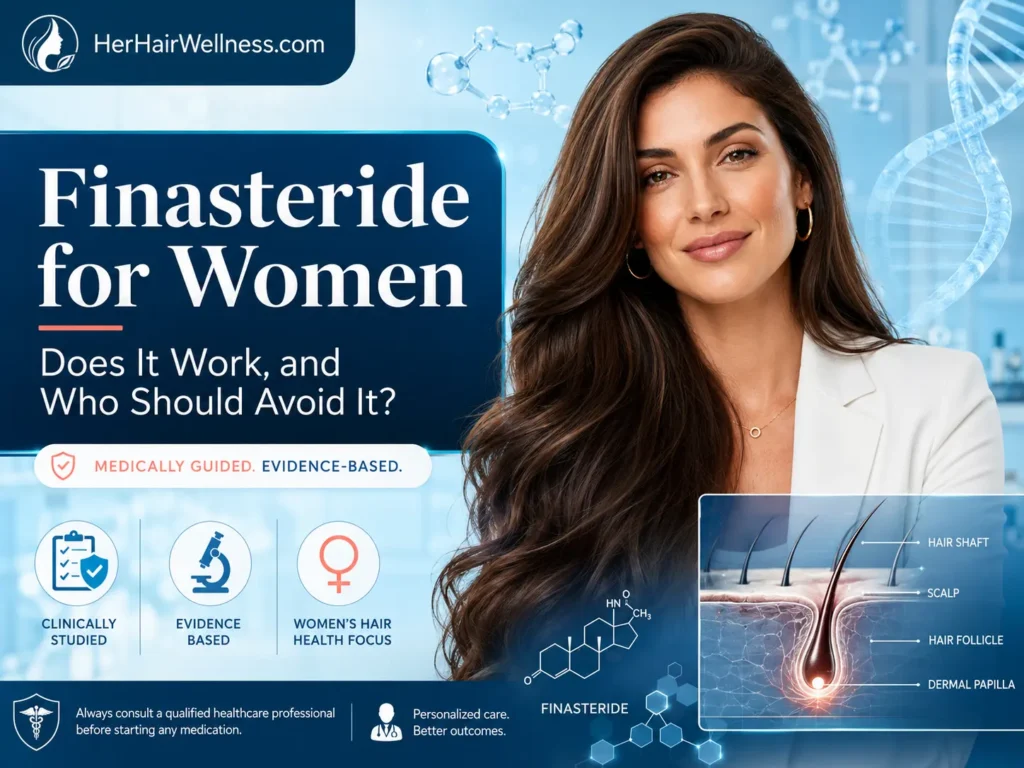
Hair loss in women is a complex condition that can affect confidence, self-image, and emotional well-being. While occasional shedding is common, progressive thinning—especially widening of the part line, reduced hair density at the crown, or gradual scalp visibility—may indicate a condition such as female pattern hair loss (FPHL), also known as female androgenetic alopecia.
Among the available treatment options, finasteride for women’s hair loss has gained significant attention. Although originally developed for prostate enlargement and later approved for male pattern hair loss, finasteride has also been studied in selected women with androgen-related hair thinning.
Finasteride works by reducing the activity of 5-alpha reductase, an enzyme responsible for converting testosterone into dihydrotestosterone (DHT). In genetically sensitive hair follicles, DHT may contribute to progressive follicle miniaturization, leading to thinner and shorter hair strands over time.
However, the decision to use finasteride in women requires careful consideration. Unlike male pattern hair loss, female hair loss has many possible causes, and finasteride is not suitable for every patient.
This article explains how finasteride works, what research shows about its effectiveness in women, who may benefit, who should avoid it, possible side effects, and how it compares with other treatments.
Quick Answer: Finasteride for Women
Finasteride may help selected women with androgen-related hair loss by lowering DHT levels and reducing its effect on susceptible hair follicles. Evidence suggests that some women—particularly postmenopausal women with female pattern hair loss—may experience improved hair density or reduced progression of thinning. However, it is not appropriate during pregnancy and should only be considered after medical evaluation.
Key Facts About Finasteride Use in Women
- Finasteride is a 5-alpha reductase inhibitor that lowers DHT production.
- It may be beneficial for some women with female pattern hair loss (FPHL).
- The strongest clinical experience is in carefully selected postmenopausal women.
- It is not suitable for pregnant women or women who may become pregnant.
- Correct diagnosis is essential because not all female hair loss is caused by androgen activity.
What Is Finasteride and How Does It Work in Women?
Finasteride is a medication that affects the androgen pathway involved in hair follicle regulation.
The body naturally converts testosterone into DHT through the enzyme 5-alpha reductase. DHT plays a major role in male pattern hair loss, but it may also contribute to hair thinning in some women who are genetically sensitive to androgen effects.
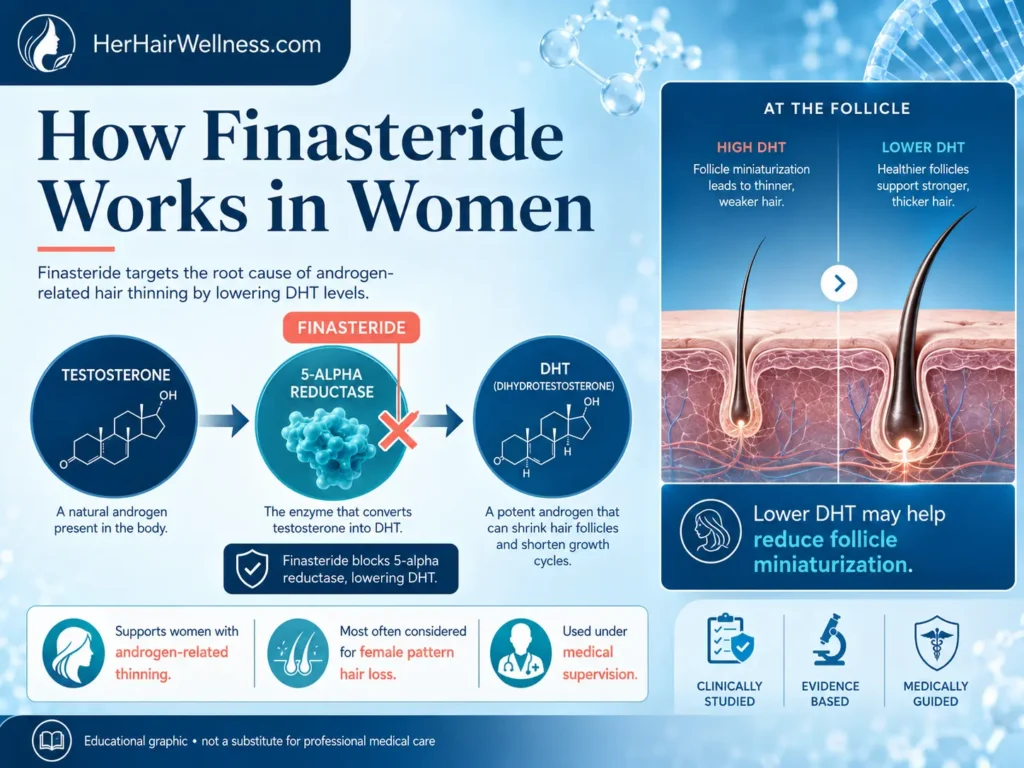
When DHT interacts with susceptible follicles, it may cause:
- Shortening of the active hair growth phase
- Progressive reduction in follicle size
- Production of finer hair strands
- Reduced overall hair density
This process is known as hair follicle miniaturization.
By reducing DHT formation, finasteride may help slow this process in women whose hair loss is driven by androgen sensitivity.
However, it is important to understand that female hair loss is not always related to DHT. Other causes may include:
- Iron deficiency
- Thyroid disorders
- Recent illness or stress
- Hormonal fluctuations
- Autoimmune conditions
- Nutritional deficiencies
- Certain medications
For this reason, confirming the cause of hair loss is an important step before considering a medication that targets androgen pathways.
Does Finasteride Work for Women With Hair Loss?
Finasteride can be helpful for some women, but its effectiveness depends on the individual patient and the underlying cause of hair loss.
Research has explored the use of oral finasteride for female pattern hair loss, particularly in women who have evidence of androgen sensitivity. Some studies have reported improvements in hair density, reduced shedding, and stabilization of thinning.
A systematic review evaluating finasteride use in women found that several studies reported positive outcomes, although researchers noted that larger controlled clinical trials are still needed because available studies vary in dosage, treatment duration, and patient characteristics (1).
The response to treatment may depend on factors such as:
- Age
- Menopausal status
- Severity and duration of hair loss
- Genetic sensitivity to DHT
- Dose and duration of therapy
Women who may be considered potential candidates include:
- Those with confirmed female pattern hair loss
- Women with progressive thinning related to androgen sensitivity
- Selected postmenopausal women
- Patients who have not achieved adequate results from other therapies
Women with hair loss caused by unrelated conditions may not experience meaningful benefit from finasteride.
How Effective Is Finasteride for Female Pattern Hair Loss?
The effectiveness of finasteride in women varies considerably between individuals.
Unlike some medications where a predictable response rate can be calculated, hair growth treatments are influenced by many biological factors. Clinical studies involving women have used different doses and included different patient groups, making direct comparisons difficult.
When finasteride is effective, realistic improvements may include:
- Reduced ongoing shedding
- Improved thickness of existing hairs
- Better scalp coverage
- Slower progression of thinning
It is important to understand that finasteride is not a guaranteed hair regrowth treatment. Hair follicles that have been severely miniaturized for a long period may have limited ability to recover.
The goal of treatment is often preservation of existing hair and improvement in hair quality rather than complete restoration.
How Long Does Finasteride Take to Work in Women?
Hair growth occurs through a slow biological cycle, so medications affecting hair follicles usually require months before meaningful changes can be assessed.
For women who respond to treatment:
First 3–6 months
Some patients may notice:
- Reduced shedding
- Stabilization of hair loss
Around 6–12 months
Possible changes include:
- Increased hair thickness
- Improved density
- Better coverage of thinning areas
After 12 months
The overall response becomes easier to evaluate.
Consistency is important because finasteride works by influencing an ongoing biological process. If treatment is discontinued, DHT-related follicle changes may gradually resume.
What Dose of Finasteride Is Used for Women?
The appropriate finasteride dosage for women with hair loss depends on individual factors rather than a single standard dose.
Unlike male pattern hair loss, finasteride does not have an officially approved female hair-loss dosage. Doctors may consider different dosing approaches depending on:
- Age
- Menopausal status
- Severity of hair thinning
- Medical history
- Other medications
- Potential risks
Doses evaluated in clinical studies include:
- 1 mg daily
- 2.5 mg daily
- 5 mg daily
A higher dose does not always mean better results. Increasing DHT suppression may also increase the possibility of unwanted effects.
Treatment decisions should always balance potential benefits with safety considerations.
Can Postmenopausal Women Take Finasteride for Hair Loss?
Finasteride after menopause has received particular research interest because postmenopausal women represent the group most commonly evaluated in clinical studies.
After menopause, changes in hormone balance may influence hair follicles. Lower estrogen levels can alter the relationship between estrogen and androgen activity, and some women may become more sensitive to androgen-related effects on hair follicles.
For selected postmenopausal women with female androgenetic alopecia, finasteride may help reduce progression of thinning and improve hair quality.
However, menopause alone does not mean finasteride is automatically appropriate. The underlying cause of hair loss, overall health, and individual risk factors should guide treatment decisions.
Can Women of Childbearing Age Take Finasteride?
Finasteride requires special caution in women who are pregnant or may become pregnant.
The medication reduces DHT levels, and DHT has an important role in male fetal development. Because of this, exposure during pregnancy may pose a risk to a developing male fetus.
Women who are considering finasteride should discuss:
- Pregnancy plans
- Contraception considerations
- Alternative treatment options
Finasteride should not be used during pregnancy, and women planning pregnancy should seek medical advice before starting therapy.
Who Should Not Take Finasteride?
Finasteride is not appropriate for every woman experiencing hair loss. Because the medication works by affecting androgen pathways, it is most suitable for women whose hair loss is related to DHT sensitivity.
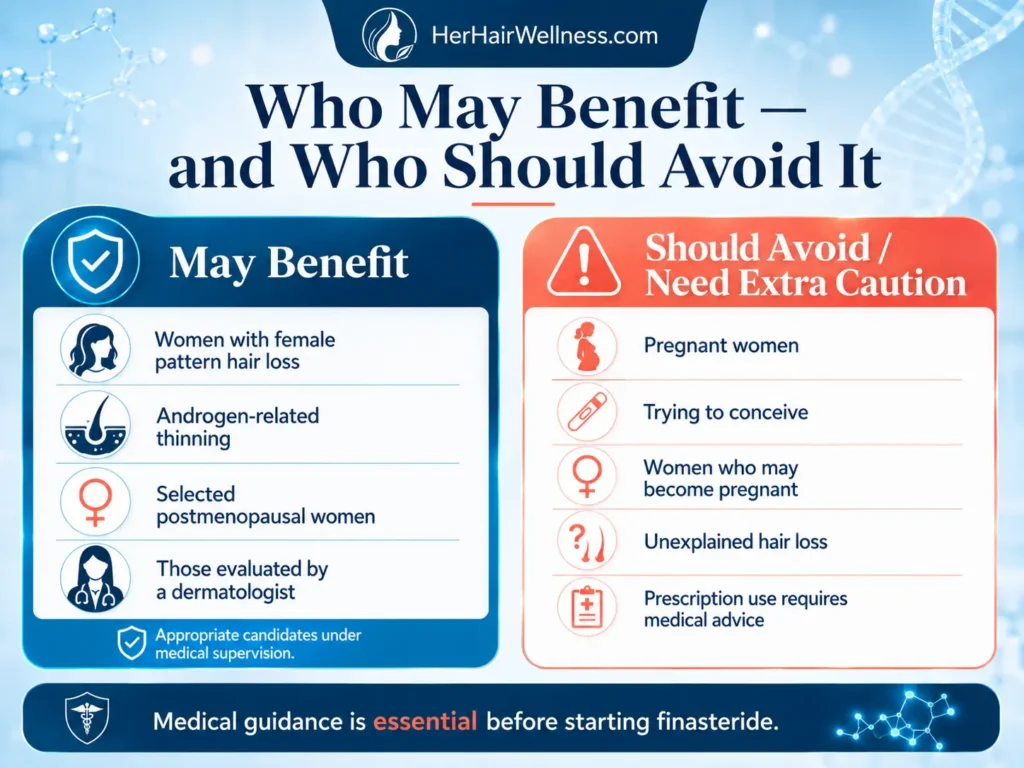
Before considering treatment, a healthcare professional should confirm the diagnosis and evaluate whether the potential benefits outweigh the risks.
Finasteride may not be suitable for:
Pregnant Women or Women Planning Pregnancy
Pregnancy is the most important contraindication.
Finasteride can interfere with DHT-related processes involved in male fetal development. For this reason:
- Pregnant women should not take finasteride.
- Women who are trying to conceive should discuss alternative treatments.
- Women who may become pregnant require careful medical guidance.
Women With Unexplained Hair Loss
Not all thinning is caused by female pattern hair loss.
Finasteride may not improve hair loss caused by:
- Telogen effluvium (stress-related shedding)
- Iron deficiency
- Thyroid abnormalities
- Autoimmune hair disorders
- Nutritional deficiencies
Treating the wrong cause may delay effective management.
Women Without Evidence of Androgen-Related Hair Loss
Finasteride primarily targets the DHT pathway. Women whose hair loss is unrelated to androgen sensitivity may experience little or no benefit.
A proper assessment may include:
- Medical history review
- Scalp examination
- Hormonal evaluation when appropriate
- Blood tests if another cause is suspected
What Are Finasteride Side Effects in Women?
Most women who use finasteride under medical supervision tolerate it well, but possible side effects should be understood before starting treatment.
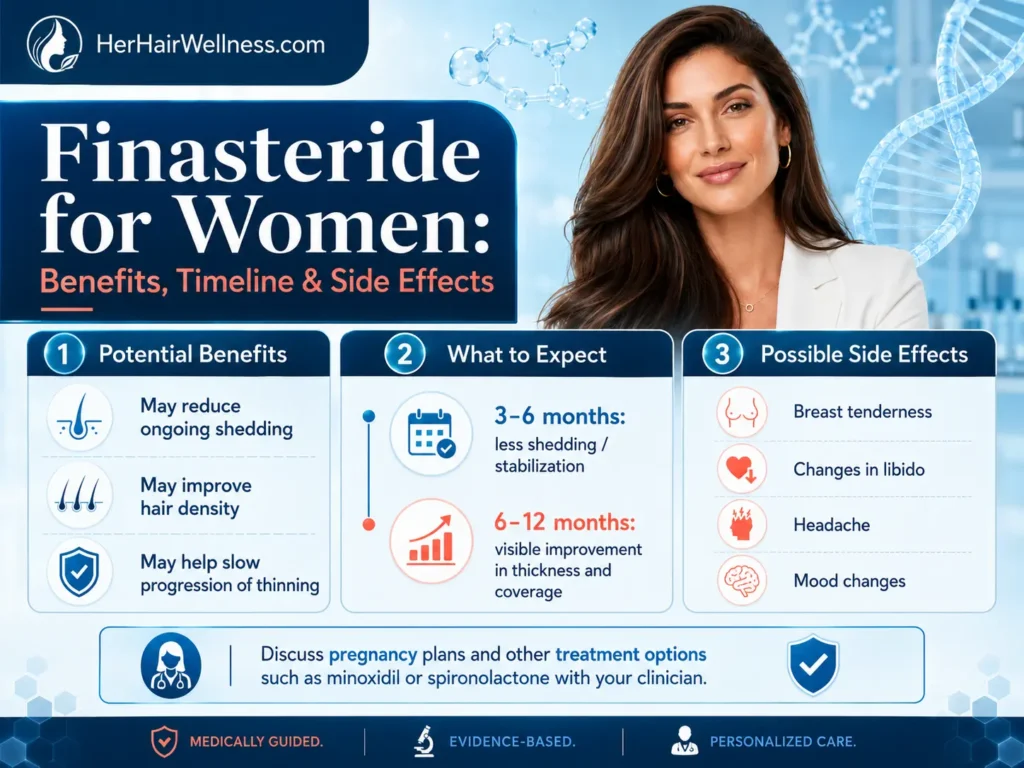
The safety profile of finasteride in women is still being studied because most large clinical datasets come from male patients.
Possible side effects reported in women include:
Hormonal-Related Effects
Some women may experience:
- Breast tenderness
- Changes in sexual desire
- Menstrual changes
- Breast enlargement (rare)
These effects may vary depending on individual hormone sensitivity.
Mood-Related Effects
Some patients have reported:
- Mood changes
- Anxiety symptoms
- Low mood
Any noticeable psychological changes after starting medication should be discussed with a healthcare professional.
Other Possible Effects
Less common effects may include:
- Headache
- Dizziness
- Skin reactions
- General discomfort
A medical professional can help determine whether symptoms are related to finasteride or another underlying issue.
Does Finasteride Affect Female Hormones?
A common concern is whether finasteride causes major hormonal changes in women.
Finasteride primarily affects the conversion of testosterone into DHT. It does not directly block estrogen production or act as a general hormone-suppressing medication.
Its main effect is:
- Reduced DHT levels
- Reduced androgen signaling at sensitive tissues
Female hormones are complex, and individual responses may vary depending on:
- Age
- Menstrual status
- Baseline hormone levels
- Other medical conditions
For women with androgen-sensitive hair follicles, reducing DHT activity may be beneficial. For others, the effect may be limited.
Does Finasteride Cause Infertility in Women?
Current evidence does not show that finasteride directly causes infertility in women.
The major reproductive concern is related to pregnancy safety rather than proven infertility effects.
Women who are planning pregnancy should discuss treatment options with their healthcare provider because:
- Finasteride should not be used during pregnancy.
- Alternative approaches may be more appropriate.
- Treatment planning should consider reproductive goals.
Is Finasteride Safe for Women?
The safety of finasteride in women depends largely on selecting the right patient.
Factors that influence safety include:
- Pregnancy status
- Age
- Medical history
- Other medications
- Reason for hair loss
For some women with confirmed female pattern hair loss, especially after menopause, finasteride may be considered a treatment option under medical supervision.
However, self-starting finasteride without confirming the cause of hair thinning is not recommended.
Finasteride vs Minoxidil for Women: Which Treatment Is Better?
Finasteride and minoxidil are often compared because both may be used for female hair loss, but they work through different mechanisms.
Minoxidil
Minoxidil is one of the most established treatments for female pattern hair loss.
It works by:
- Stimulating follicle activity
- Extending the growth phase of hair follicles
- Supporting thicker hair production
Advantages:
- Strong clinical experience in women
- Widely used as a first-line option
- Does not affect androgen pathways
Limitations:
- Requires continuous use
- May cause scalp irritation
- Initial shedding can occur in some users
Finasteride
Finasteride works differently by reducing DHT formation.
Potential advantages:
- Targets androgen-related mechanisms
- May help women with DHT-sensitive follicles
Limitations:
- Not appropriate during pregnancy
- Evidence in women is more limited than minoxidil
- Requires careful patient selection
For some women, doctors may consider combining treatments when appropriate.
Finasteride vs Spironolactone for Female Hair Loss
Both finasteride and spironolactone influence androgen-related pathways, but they work differently.
Finasteride
Finasteride reduces DHT production by blocking 5-alpha reductase.
Spironolactone
Spironolactone works mainly by reducing androgen activity at the receptor level.
It is often considered in women who have signs of increased androgen activity, such as:
- Acne
- Excess facial hair growth
- Hormonal-pattern hair thinning
The choice between these medications depends on:
- Hormonal profile
- Menstrual status
- Medical history
- Treatment goals
Can Women Use Topical Finasteride for Hair Loss?
Topical finasteride has gained interest because it may provide local scalp effects while potentially reducing systemic exposure.
Research into topical finasteride for women’s hair loss is ongoing.
Some studies have evaluated topical finasteride combined with minoxidil in women and reported improvements in hair measurements compared with treatment alone. However, more research is needed to fully understand long-term effectiveness and safety.
Potential advantages of topical formulations include:
- Direct application to the scalp
- Possible reduction in systemic drug exposure
However, topical finasteride is still a medical treatment and should be discussed with a qualified healthcare professional.
What Should Women Discuss With Their Doctor Before Taking Finasteride?
Before starting finasteride, women should consider a thorough evaluation rather than focusing only on medication choice.
Important discussions include:
Confirming the diagnosis
A healthcare provider should determine whether the hair loss is truly female pattern hair loss or another condition.
Reviewing pregnancy considerations
Women should discuss:
- Current pregnancy status
- Future pregnancy plans
- Appropriate precautions
Understanding realistic expectations
Finasteride may help slow progression and improve density, but results vary.
Considering alternatives
Depending on the individual case, options may include:
- Minoxidil
- Spironolactone
- Dutasteride
- Low-level laser therapy
- Nutritional correction when deficiencies exist
Final Takeaway: Is Finasteride Worth Considering for Women?
Finasteride can be a valuable treatment option for carefully selected women with female pattern hair loss, particularly those with evidence of androgen-related follicle changes.
The medication works by reducing DHT activity, which may help slow hair follicle miniaturization and preserve existing hair.
However, successful treatment depends on:
- Correct diagnosis
- Appropriate patient selection
- Understanding safety considerations
- Realistic expectations
Finasteride is not a universal solution for female hair loss, but for the right patient, it may become an important part of a personalized treatment plan.
Medical Disclaimer
This article is intended for educational and informational purposes only and does not replace personalized medical advice, diagnosis, or treatment from a qualified healthcare professional. Finasteride is a prescription medication and may not be appropriate for every woman. Always consult a dermatologist or healthcare provider before starting, stopping, or changing any treatment for hair loss.
Frequently Asked Questions
Does finasteride work for women with hair loss?
Finasteride may help selected women with female pattern hair loss by reducing DHT activity at sensitive hair follicles. Results vary, and treatment is usually considered after confirming that hair loss is related to androgen sensitivity.
How long does finasteride take to work in women?
Because hair growth occurs slowly, improvement usually requires several months. Some women may notice reduced shedding within 3–6 months, while visible changes in thickness and density may take 6–12 months or longer.
Who should avoid taking finasteride?
Finasteride should be avoided during pregnancy and by women who may become pregnant because of potential risks to fetal development. Women with unexplained hair loss should also receive proper evaluation before considering treatment.
What are the side effects of finasteride in women?
Possible side effects may include breast tenderness, changes in libido, mood changes, headache, or menstrual changes. Many women tolerate treatment well, but medical supervision is recommended.
Can postmenopausal women take finasteride for hair loss?
Some postmenopausal women with female pattern hair loss may benefit from finasteride after evaluation by a healthcare professional. Menopause alone does not determine whether the medication will be effective.
Is finasteride better than minoxidil for women?
Finasteride and minoxidil work through different mechanisms. Minoxidil has stronger evidence as a commonly used treatment for female pattern hair loss, while finasteride may be useful for women with androgen-sensitive hair loss.
References
1. Fertig RM, Gamret AC, Cervantes J, Tosti A.
Finasteride and its potential for the treatment of female pattern hair loss: Evidence, mechanisms, and clinical considerations. Dermatology and Therapy. 2020;10:1–12.
DOI: 10.1007/s13555-019-00347-6
2. Oliveira-Soares R, Vano-Galvan S, Piraccini BM, Vincenzi C, Tosti A.
Efficacy and safety of finasteride in women with female pattern hair loss: A systematic review and clinical evidence evaluation. International Journal of Dermatology.
DOI: 10.1111/ijd.14370
3. Rossi A, Cantisani C, Melis L, Iorio A, Scali E, Calvieri S.
Finasteride, 1 mg daily, for the treatment of female pattern hair loss. Journal of the American Academy of Dermatology.
DOI: 10.1016/j.jaad.2012.09.020